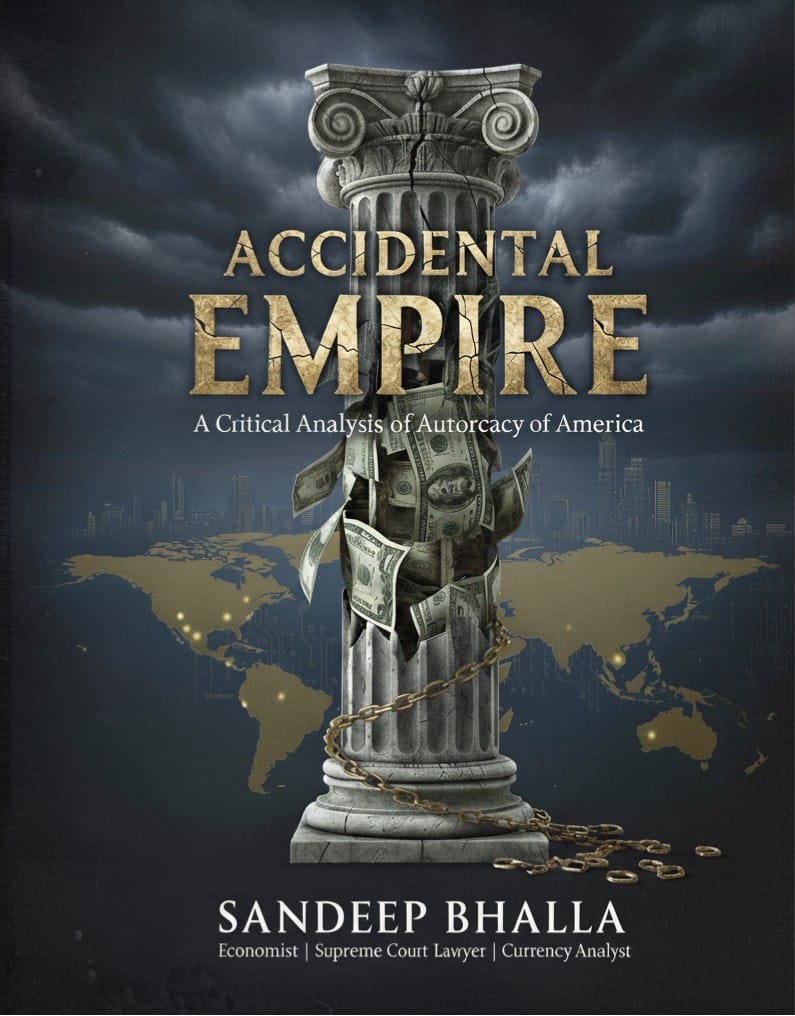
End of the Gold Standard
Nobody deserves the gold but me.
On August 15, 1971, President Richard Nixon made a decision that would reshape the global economy for the next half-century. In a televised address that Sunday evening, he announced that the United States would no longer convert dollars to gold, effectively ending the Bretton Woods system that had governed international finance since 1944. What makes this decision remarkable is not just its sweeping consequences, but the man who made it and how thoroughly unprepared he was for what he was unleashing.
The Accidental Emperor
Nixon was never supposed to make decisions about global monetary policy. Born in small -town California, he was a lawyer who somehow stumbled into politics. He rode the anti-Communist wave to the Vice Presidency, lost to Kennedy's telegenic charm, and clawed his way back to the White House through sheer determination. His own admission in his memoir, “I have always believed that America's economy operates best with the least possible government interference” proves the reluctance to be an overlord. Yet here he was, about to impose the most dramatic government intervention in economic history.
The irony runs deeper. Nixon was, by all accounts, an introvert forced to operate in an extrovert's world. He was “awkward or uncomfortable in public” but “methodical and deliberate in private settings.” He was a man who felt constantly under siege by a media establishment that he believed had elevated Kennedy and sought to destroy him. And now, facing mounting economic pressure and political criticism, he was being asked to make a decision that would affect billions of lives, a decision he did not fully understand.
Bretton Wood Gold
By 1971, Nixon was trapped. Inflation climbed. Unemployment rose. Democrats and Republicans hammered him to “do something.” Vietnam War spending had destabilized everything. Predecessor Johnson's Great Society programs were financed through deficit spending. Nixon's attempts to fix things had failed spectacularly. He created productivity commissions, inflation alerts, review boards. Nothing worked.
Then came the trigger. The British ambassador appeared at Treasury in August. He wanted $3 billion converted to gold. He was invoking the promise made by the USA to reimburse an ounce of gold for $ 35, in Bretton Wood. Nixon understood the trap. Give them gold and other countries rush to get theirs. Refusal would amount to admission that America cannot meet conversion demands.
Massive war spending created dollar oversupply that European allies increasingly converted to gold. France under Charles de Gaulle led this challenge, actively exchanging dollars for gold while explicitly calling the system America's “exorbitant privilege.” By 1971, America held only $10 billion in gold reserves against $80 billion in foreign-held dollars. Exact figures are not clear but mismatch is a matter of record.
This created an impossible situation. Continuing Vietnam required spending that would accelerate gold outflows and potentially trigger complete monetary collapse. Ending the war would represent strategic defeat and encourage challenges to American hegemony worldwide.
Nixon wrote about this moment. “Whether we honoured or denied this request, the consequences of our action would be fraught with danger.” For a man already paranoid about appearing weak, this was unbearable. Something had to be done quickly.
Consultation
Nixon's response was characteristically insular: he assembled 15 experts at Camp David for a secret weekend meeting/consultation. These were men who “understood the intricate complexities of economics.” These were John Connally, Arthur Burns, George Shultz, Paul McCracken, Herbert Stein, Peter Peterson, and Paul Volcker. Nixon, the small-town lawyer turned politician, was surrounded by genuine expertise.
But here's where the story becomes fascinating. Despite having 15 economic experts in the room, Nixon's memoir reveals a man who perhaps did not grasp what he was doing. His scattered, rambling writing style reflects a mind overwhelmed by conflicting advice, jumping between political considerations, economic theories, and personal anxieties. “I always gave great weight to Burns's opinions,” he wrote, but “this was to be one of the few cases in which I did not follow his recommendations.”
Arthur Burns, the Federal Reserve Chairperson, warned against closing the “gold window.” He predicted that Nixon would take the blame if the dollar was devalued, that “Pravda would write that this was a sign of the collapse of capitalism,” and that the consequences would be unpredictable. Burns wanted to wait.
But Nixon was out of patience. Treasury Secretary John Connally, a master of the “big play,” had recommended “total war on all economic fronts.” And Nixon, feeling politically cornered and temperamentally inclined to trust his inner circle, went with Con nally's advice. However, the Chapter titled 1971, in the memoir of Nixon, does not say that he considered the reputation of or the possible breach of trust by the USA. He did not consider the fallout of wriggling out an international treaty, unilaterally.
In fact, his memoir is conspicuously silent about his own reflections on the decision. Even more shockingly, it is silent about the international implications of revoking dollar convertibility into gold. Some of these issues are discussed hereafter.
Breach of Trust
America created the Bretton Woods system in 1944. The deal was simple. Every dollar could be exchanged for gold at $35 per ounce. Other countries agreed to hold dollars as reserves because of this promise. This was not just a business arrangement. It was a sacred trust.
The United States became the world's banker. Other nations deposited their wealth in dollars. They did this because America gave its word. This was its fiduciary duty to the world. When you hold other people's money, you become their fiduciary. This creates the highest duty known to law. You must act for their benefit, not yours.
The IMF Articles of Agreement spelled this out clearly. Article XII said Executive Directors “owe their duty entirely to the Fund.” Not to America. Duty to the institution and all its members.
America was not just another country in this system. It was the cornerstone. The foundation. The guarantee. Foreign central banks held roughly $80 billion in dollar reserves by 1971. Every single dollar existed because of America's gold promise. Nixon closed the gold window. He did it unilaterally. No consultation. No negotiation. No warning.
Foreign governments woke up to find their reserves had been devalued overnight. The promise that backed every dollar they held simply vanished. Nixon had domestic legal authority for this move. The Gold Reserve Act gave presidents power over gold policy. Thus, under American law, he acted legally. But that misses the entire point.
A fiduciary duty does not care about domestic laws. It is about the trust others placed in you. Let me be clear about what Nixon violated.
Nixon acted purely for American interests. The dollar was draining America's gold. Foreign countries were converting dollars to gold. This threatened US economic power. So Nixon stopped honouring the promise. He saved America's gold by breaking faith with everyone else. A fiduciary must act for the beneficiaries' benefit. Nixon did the exact opposite. He benefited America by harming dollar holders worldwide.
Duty of Good Faith
The obligation to perform treaties in good faith is foundational. Every treaty relationship requires this minimum standard. Nixon did not even pretend to negotiate. No IMF consultation. No attempt at burden sharing. No transition period. He announced the decision over a weekend when markets were closed. Other countries could not even respond before it became reality. This was not good faith. This was an ambush.
Self dealing occurs when fiduciaries benefit themselves at beneficiaries' expense. This is exactly what happened. America gained by escaping gold discipline. It could now print dollars without limit. The “exorbitant privilege” continued without the gold constraint. Foreign dollar holders lost value instantly. Their reserves purchased less. They had no choice but to accept depreciating dollars. Developing countries got hit hardest. They could not diversify reserves as easily as rich nations. They had to bear the full loss.
Duty to Disclose
Fiduciaries must share material information with those they serve. Nixon did the opposite. The Camp David meetings were secret. America misled partners about its intentions right up until the announcement. Even close allies like Britain and Germany got no warning. They learned from Nixon's television address like everyone else.
France's Charles de Gaulle had suspected American intentions. He converted French dollars to gold throughout the 1960s. Other countries mocked him for distrusting America. He was proved right. They were naive.
Some will say the Bretton Woods system was failing anyway. The USA had to print dollars to supply the whole world and thereby run deficit budgets. The deficit dilemma made it unsustainable. All true. But completely irrelevant. The manner of breaking faith matters as much as the breaking itself. There were proper processes available. America could have consulted the IMF. It could have requested formal devaluation approval. It could have proposed an orderly transition. Inmost probabilities the IMF would have approved these measures. The economic case was strong. Other countries understood the pressures.
But that would have meant negotiating. Sharing control. Accepting conditions. Treating other nations as equals rather than subjects. America chose raw power over legal process. It could act unilaterally, so it did.
Lesson on Hegemony
Here's what this episode teaches about fiduciary duty and power. Legal duties imply nothing without enforcement. International law recognized America's obligations. The IMF Articles spelled out fiduciary duties. Good faith requirements existed. None of it mattered. America was too powerful to be punished. Too important to alienate during the Cold War. Too central to the global economy to sanction.
So, the breach was made. Other countries swallowed it. The Jamaica Accords later legitimized what had been illegal. This does not imply fiduciary duties were fake. It means powerful actors can violate duties when enforcement mechanisms fail. But consequences still followed. America's credibility took a permanent hit. Resentment festered. Calls for alternatives to dollar dominance grew louder.
Today's BRICS currency proposals trace directly to 1971's betrayal. Countries remember when America broke its word. They are building systems to avoid depending on American promises again.
The Blank Check
Nixon announced a series of measures on that Sunday night. These included:
-
A ninety-day freeze on wages and prices, aimed at curbing inflation during an economic crisis.
-
Investment tax credits to stimulate business investments in the economy.
-
Import tariffs or duties as a means of protecting domestic industries from foreign competition.
-
Almost incidentally mentioned was the suspension of dollar convertibility into gold, which he referred to as “closing the gold window.”
-
This meant that Nixon allowed the value of the US Dollar to be determined by market forces. The Earlier system of the fixed exchange rate with gold was abandoned. The term 'float' used in his Memoir is significant because it indicates his understanding and acceptance of this shift in economic policy, even though he may not have fully grasped its potential long-term implications or consequences.
Nixon was focused on solving his immediate political crisis. He needed to look decisive, to respond to critics who said he was not sufficiently active about unemployment and inflation. The wage and price controls would grab headlines. The gold decision was, from his perspective, a technical adjustment to prevent a run on American gold reserves.
This was the mindset of someone making tactical decisions under pressure, not strategic choices with a clear vision of their consequences. Nixon was not building an empire. He was surviving his next press conference.
However, what he actually did was to hand over, future American governments, a blank check that could be written against the global economy. He did consider it, but assumed that it was not possible.
Tactical vs. Strategic
It may be considered that as a politician, Nixon was no great nation builder or visionary. From an ambivalent public speaker, he became an expert commentator in later years of life. Later in his life he would comment on geopolitical events frequently but he was never a strategic person. Look at his China policy.
Nixon's Historic Blunder: The China Opening
The 1972 Nixon visit to China, long celebrated as a diplomatic masterstroke, deserves re-examination as a tactical misstep with profound strategic consequences. Rather than representing visionary statecraft, the China opening reflects crisis-driven decision-making that inadvertently facilitated the rise of America's primary strategic competitor.
The Tactical Nature of the Decision
Nixon's China policy emerged from immediate domestic and foreign policy pressures rather than long-term strategic planning. By 1971, the administration faced multiple crises like mounting inflation that forced abandonment of the Bretton Woods system, an unpopular Vietnam War draining resources and credibility, and Soviet nuclear parity challenging American global dominance. The China opening represented a desperate attempt to gain leverage over Moscow and extract the United States from Vietnam, not a calculated strategy to reshape global power dynamics.
Michael Pillsbury, a key architect of U.S.-China engagement policy, has candidly acknowledged this was a historic error. His insider perspective reveals that policymakers operated under fundamental mis-assessments of Chinese capabilities and intentions. Today, the USA considers China a threat to its hegemony. In 1971, China possessed neither economic strength nor industrial capacity to assist American interests materially. The decision to support China rested primarily on symbolic value, unsettling Soviet leadership through the prospect of Sino-American alignment. None of which happened but China prospered on the USA’s capital and technology.
The Illusion of Leverage
The tactical success of pressuring Moscow into détente and arms control agreements masked a strategic failure to understand Chinese long-term objectives. American policymakers assumed engagement would gradually transform China into a democratic, Western-oriented partner. This assumption proved catastrophically wrong. Instead of creating a junior partner, the United States provided crucial assistance to a future rival's development.
The China opening granted Beijing access to American technology, capital markets, and international institutions while expecting nothing substantive in return regarding Vietnam. Chinese aid to North Vietnam continued throughout the war, and Beijing's influence over Hanoi proved limited. The symbolic victory came at the cost of legitimizing and strengthening a regime whose fundamental objectives contradicted American interests.
The Strategic Consequence
What Nixon and Kissinger conceived as realpolitik manoeuvring within a bipolar framework actually created the conditions for multipolarity with China as a peer competitor. The decision to engage China economically while maintaining military containment of the Soviet Union represented a profound strategic miscalculation. It divided American resources and attention while providing China with decades of uncontested economic development.
The tactical benefits oft emporary Soviet accommodation and face-saving withdrawal from Vietnam proved ephemeral. The strategic costs of enabling China's rise to great power status while maintaining adversarial relations, continue to define American foreign policy challenges today.
Historical perspective reveals Nixon's China opening was a tactical decision dressed up as a grand strategy. The immediate crisis management succeeded, but the long-term consequences suggest this represents one of the most significant strategic errors in American foreign policy. Therefore, the conclusion is that the most important economic decision of recent history happened accidentally.
Nixons's advisor on China Policy, Michael Pilsbury, has a decade back, written a book in which he has admitted that American Policy to support China and promote its capacities were almost a blunder. The book proved to be a commercial success too. Thus the only conclusion is that President Nixon ended the gold standard not from brilliant strategy. Not from understanding consequences. He was surviving 1971 politics.
Was the most powerful empire inhuman history not built by visionaries? Was it born from political panic and crafted by experts who could not seethe future? Was it implemented by a man who just wanted to survive his next election? Sometimes history's biggest decisions are made by people who have no realization that they are making history.
Today we live with those consequences. The $37 trillion debt continues to grow. The system Nixon accidentally created shows strain. All attempts of Congress to rein in the debt have failed. Let us analyse these attempts in the next chapter.
Leave a Response