Decoding the War in Yemen and Saudi Arabia
The Yemen-based Houthi movement (officially known as Ansar Allah) has sharply escalated. The Houthis, backed by Iran, have been launching various attacks on Saudi territory, including missile strikes and drone attacks.
Yemen shares a porous 1,800 km land border with Saudi Arabia. Any hostile or autonomous power center in Yemen directly threatens southern Saudi cities, oil facilities, and internal stability. This longstanding fear of Saudi has come true. Today Hauthi's are attacking inside Saudi Arabia.
The Trigger
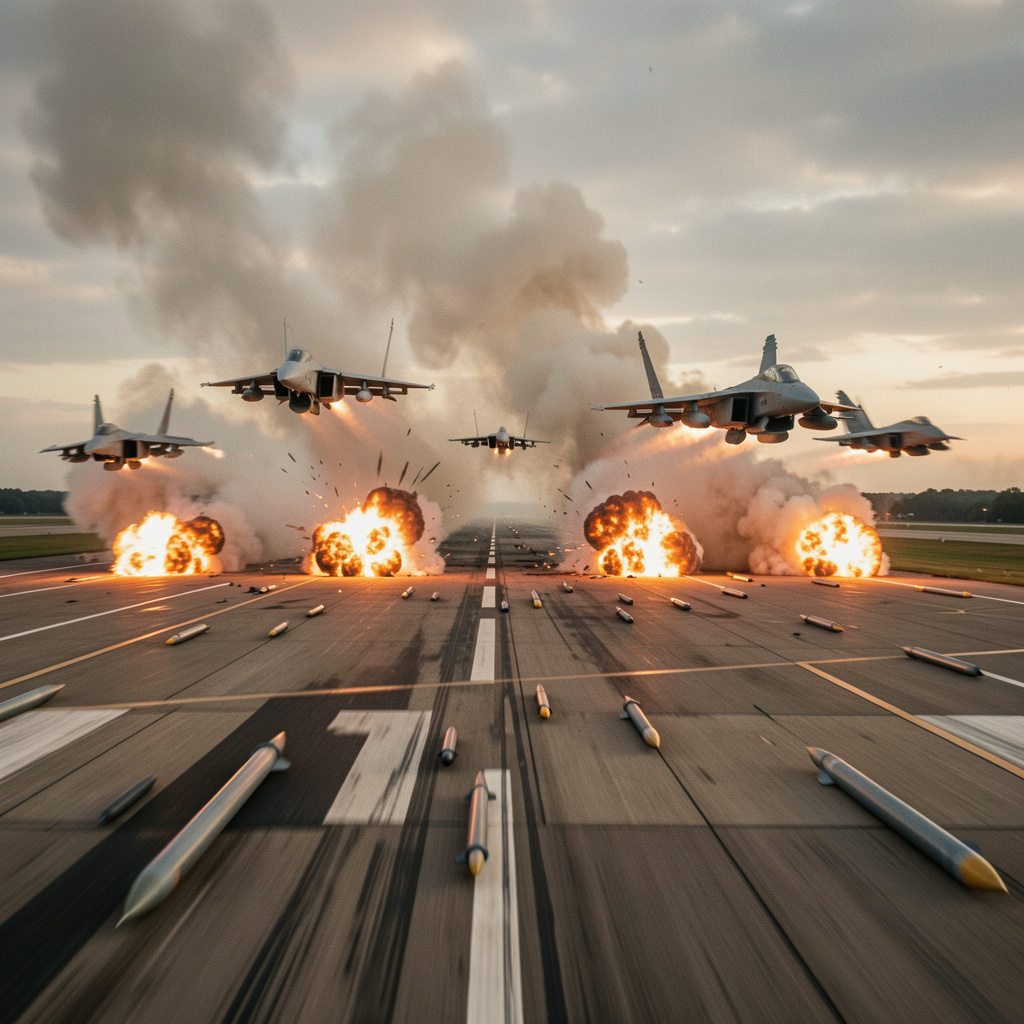
It was the afternoon of July 13, 2026. The sky over Sanaa was meant to be the canvas for a decisive message. Saudi fighter jets streaked through the airspace to crater the single runway of Sanaa International Airport.
An Iranian civilian aircraft collected a Houthi delegation from Sanaa to attend Ayatollah Khamenei's funeral. Saudi planes bombed the runway before the plane could return. The Houthis claimed their forces confronted Saudi warplanes attempting to prevent the Iranian aircraft from landing at Sanaa International Airport.
The tactical objective was to block an Iranian transport aircraft. The strategic objective was older and blunter. It was a show of force. It was a reminder to a stubborn militia of who controlled the heavens over the Arabian Peninsula.
But war is an unforgiving tutor, and arrogant assumptions rarely survive contact with a battle-hardened adversary. The Iranian flight did not turn back. It simply diverted to the Houthi-held Red Sea coastal airport of Hodeidah, landing safely. No adversary was neutralized. No diplomatic leverage was gained. Instead, the airstrike triggered a cascade of consequences that nobody in Riyadh had anticipated.
Houthi did not take it lying down. They soon responded. Within eighteen hours of the runway bombing, Houthi ground units launched a pre-planned, devastatingly swift coastal offensive. They overran the strategic towns of Dhubab and Murad, consolidating physical command over the Bab el-Mandeb littoral. Shortly thereafter, a swarm of cheap, long-range loitering drones bypassed Saudi air defenses. They slammed into the pumping stations of the East-West Petroline (the kingdom’s vital overland artery).
The drones attacked Saudi oil infrastructure in August and again in September 2026. Multiple strikes that resulted in injuries and damage. It forced Saudi Arabia to close its seven-million-barrel-per-day East-West pipeline as a precautionary measure.
Their cross-border strikes frequently target southern Saudi regional hubs and military installations. It includes Abha Airport, King Khalid Airbase in Khamis Mushait, and border facilities in Jazan and Najran.
In September Yemen's Houthi rebels also attempted to attack Saudi Arabia's capital, Riyadh, with a ballistic missile. It was the first such targeting since the escalation of conflict. The missile was intercepted, and there were no reported casualties or damage.
Strait of Bab el-Mandeb
The Strait of Bab el-Mandeb is one of the world's key maritime chokepoints. It is opposite Djibouti and the wider Horn of Africa.
Houthi forces have swept along the southern Red Sea coast, taking decisive control over islands and coastal artillery positions commanding the Bab el-Mandeb Strait.
The Persian Gulf or Strait of Hormuz is already blocked by Iran. The maritime transit through the Persian Gulf is not possible for Saudi Arabia to export its oil.
Saudi Arabia had relied on pumping crude overland via its 1,200-kilometer East–West Pipeline (Petroline). It pumps oil across the desert to the Red Sea export terminal at Yanbu. Hauthis have deployed long-range drone and missile strikes against pumping stations. The pipeline is damaged. Therefore, the operations were suspended. With the terminal cut off and storage facilities vulnerable, Saudi Arabia’s primary alternative export channel has been crippled.
The situation is a direct threat to Saudi Arabia.
Allied Help
Long term ally of Saudi, USA is not coming forward for help. Washington faces a dilemma over whether to help the Saudis fight the Houthis, risking further expansion of the war. Every dollar and warhead used to defend Saudi infrastructure is a dollar that doesn't go to other priorities. The calculus changed. War with Iran changed everything.
Now Crown Prince Mohammed bin Salman tours Egypt, Jordan, and Turkey desperately trying to rebuild some coalition. But everyone learned the same lesson Saudi Arabia still hasn't. The lesson is that military dominance doesn't translate to political control when your enemy has nothing to lose. Especially when the enemy can inflict pain indefinitely from terrain you cannot occupy.
USA has encountered this situation repeatedly but it has refused to learn any lesson. The War with Iran is simply repeating the message from history.
The Mecca Pact
The Mecca Pact (formally the Mecca Joint Defence Agreement) was signed on August 7, 2026, by Saudi Arabia, Pakistan, and Turkey. Its central principle is that an armed attack on one member is treated as an attack on all three. It was claimed to be similar in wording to NATO’s Article 5.
Pakistan and Turkey have condemned attacks and emphasized support for Saudi security, but neither has launched a joint operation against the Houthis. This was the first major test, and they have exposed uncertainty about how far the three countries are prepared to go militarily.
China's Help
Now Saudi Arabia has turned to China for help against Yemen’s Iran-backed Houthis China diplomatically asked Iran to use its influence to restrain the Houthis. This reflects the growing role of China in the crisis around the Bab el-Mandeb Strait. China has emphasized the need for regional stability and urged all parties to resolve differences through dialogue.
The Yemen-Saudi conflict is not a simple fable of a wealthy kingdom victimized by a rogue militia. Nor is it a romantic tale of indigenous freedom fighters resisting an empire. It is a story of a catastrophic failure of political imagination. It is a story of failures compounded over long periods of time measured in decades. It is a 60 years or perhaps older problem.
While it is difficult to predict the future with certainty, a trajectory of this war can be predicted but only if we understand the genesis of this problem.
The media fragments reality into consumable pieces. An attack here and now. A plane strike there. It simplifies things but it distorts reality.
Yemen is a human trap. It is a society which is stuck in a slice of time that happened long ago. The people in control kept it that way to enable them to control the population. They used different ideologies at different time to achieve the same result.
Initially Saudi Arabia wanted to take control of that trap in Yemen. Later it switched to military option. It walked blindly into it, and now, bruised and alienated, it cannot find the exit.
Understanding this war requires analysis of Yemen, Saudi Arabia and entire region over a long period of time. If you are interested in a detailed analysis of the problem, please continue to read through all the chapters. It is long but it is worth the effort.
In the next chapter, we shall discuss Yemen, the oasis in the desert that it was and the crises that define it today.
References:
1. Gaps in Mecca Pact 2. China emerges as Saudi Arabia’s latest lifeline
Leave a Response