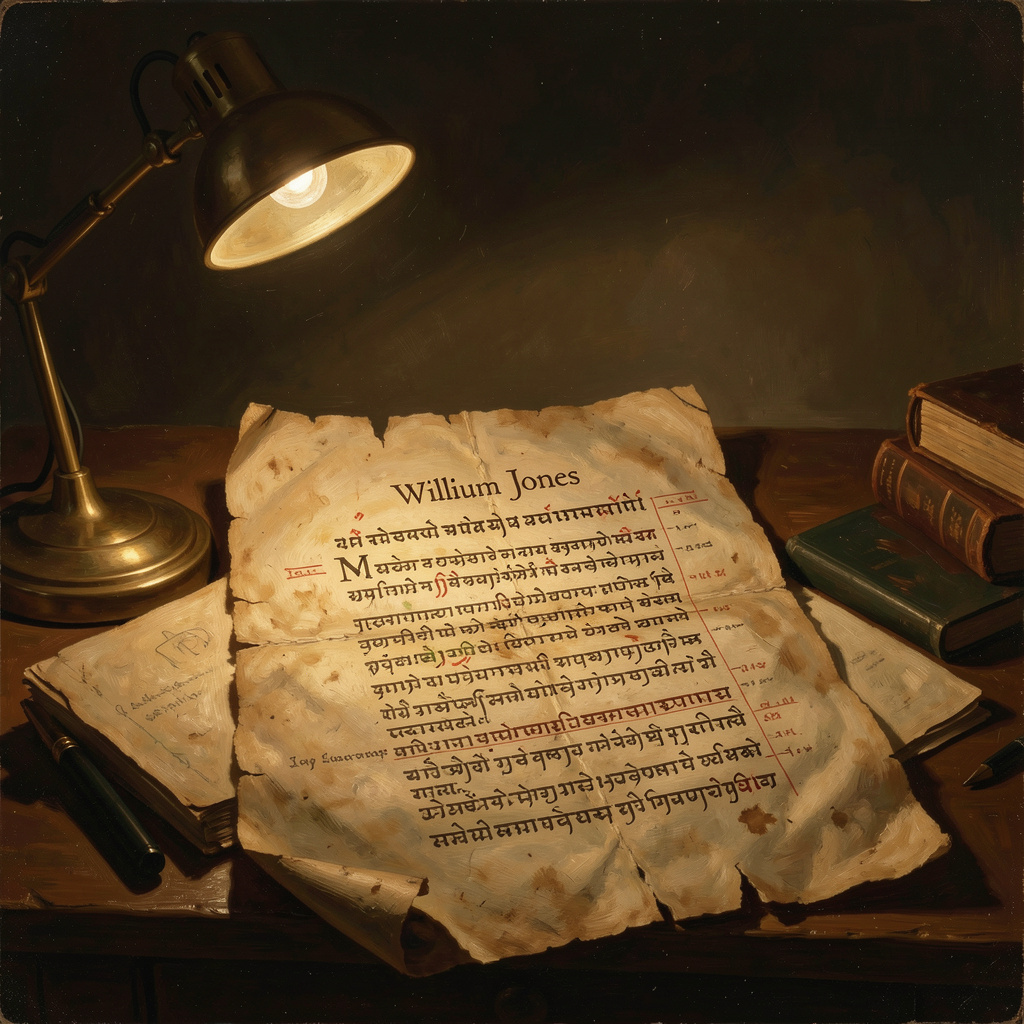
INSTITUTES OF HINDU LAW;
OR, THE ORDINANCES OF MENU, ACCORDING TO THE GLOSS OF CULLÚCA
Comprising the Indian System of Duties, Religious and Civil
Verbally Translated from the Original Sanscrit
By SIR WILLIAM JONES
One of the Judges of Her Majesty's Supreme Court, Fort William, Bengal; Founder and First President of the Asiatic Society of Bengal.
Calcutta: Published by Brojendro Lall Doss, Printed by Nundogopal Banerjee at the Rajasthan Press.
INSTITUTES HINDU LAW; OR, THE ORDINANCES OF MENU, ACCORDING TO THE GLOSS OF CULLUCA, COMPRISING THE INDIAN SYSTEM OF DUTIES, RELIGIOUS AND CIVIL. VERBALLY TRANSLATED FROM THE ORIGINAL SANSCRIT BY SIR WILLIAM JONES ONE OF THE JUDGES OF HER MAJESTY'S LATE SUPREME COURT, FORT WILLIAM BENGAL; FOUNDER AND FIRST PRESIDENT OF THE ASIATIC SOCIETY OF BENGAL. PUBLISHED BY BROJENDRO LALL DOSS, NO. 8 PUTTULDANGAII STREET. CALCUTTA: PRINTED BY NUNDo’gOPAL BANERJEE, AT THE RAJASTHAN ?RESS, No. 134 Amherst Street.
Institutes of Hindu Law have been very correctly printed, and the whole impression has just been sent to the Governor and Council, who will not fail to transmit copies for the King’s library, for yourself, and for the Directors. If I had obtained his Majesty’s leave to resign my office, nothing would now keep me ‘here, but the Digest of Indian Laws, consisting of nine large volumes, two of which remain to be collated and studied with the learned Brahmen, who assists me : he is old and infirm ; but, should he be able to attend me another year, or two years at the very utmost, the whole work will be finished, and* I shall copy it during my voyage, if the King shall graciously permit me to leave India.
I, therefore, intreat you, Sir, to lay before his Majesty, my humble supplication for his gracious permission to resign my judgeship in the year 1795, or (tf the Digest should not then be completed) in 1796; it being my anxious wish to pass the remainder of my life in studious retirement, though devoted, as I ever have been, to the service of my King and my Country, and of that recorded Constitution, which is the basis of our national glory and felicity.
I have the honour to be, Sir, your very obedient, humble Servant.
The Right Honourable Henry Diindas , Esq.
IT is a maxim in the science of legislation and government, that Laws are of no avail without manners , or, to explain the sentence more fully, that the best intended legislative provisions would have no beneficial effect even at first, and none at all in a short course of time, unless they were congenial to the disposition and habits, to the religious prejudices, and approved immemorial usages, of the people, for whom they were enacted ; especially if that people universally and sincerely believed, that all their ancient usages and established rules of conduct had the sanction of an actual revelation from heaven : the legislature of Britain having shown, in compliance with this maxim, an intention to leave the natives of these Indian provinces in possession of their own Laws, at least on the titles of contracts and inheritances , we may humbly presume, that all future provisions, for the administration of justice and government in India will be conformable, as far as the natives are affected by them, to the manners and opinions of the natives themselves ; an object, which cannot possibly be attained, until those manners and opinions can be fully and accurately known. These considerations, and few others more immediately within my province, were my principal motives for wishing to know, and have induced me at length to publish, that system of duties, religious and civil, and of law in all its branches, which the Hindus firmly believe to have been promulged in the beginning of time by Menu, son or grandson of Brahma; or, in plain language, the first of created beings, and not the oldest only, but the holiest, of legislators ; a system so comprehensive and so minutely exact, that it may be considered as the Institutes of Hindu Law, preparatory to the copious Digest \ which has lately been complied by Pandits of eminent leading, and introductory perhaps to a Code, which may supply t% many natural defects in the old jurisprudence of this country and, without any deviati^from its principles, accommodate it justly to the improvements of a commercial age.
We are lost in an inextricable labyrinth of imaginary astronomical cycles, YugaSy Mahdyugas, Calpds , and ^enwantaras, in attempting to calculate the time, when the first Menu, according to the Brdhmens , governed this world, and became the progenitor of mankind, who from him are called Mdnavdk ; nor can we, so clouded are the old history and chronology of India with fables and allegories, ascertain the precise age, when the work, now presented to the Public, was actually composed ; but we are in possession of some evidence, partly extrinsic and partly internal, that it is really one of the oldest compositions existing. From a text Para'sara, discovered by Mr. Davis, it appears, that the vernal equinox had gone back from the tenth degree of Bharanl to the first of Aswinl \ or twenty-three degrees and twenty minutes, between the days of that Indian philosopher, and the year of our Lord 499, when it coincided with the origin of the Hindu ecliptic ; so that Para'sara probably flburished near the close of the twelfth century before CHRIST : now Para'sara was the grandson of another sage, named Vasisht’ha, who is often mentioned in the laws of Menu, and once as contemporary with the divine BllRIGU himself ; but the character of BhriGU, and the whole dramatical arrangement of the book before us, are clearly fictitious and ornamental, with a design, too common amoni ancient lawgivers, of stamping authority on the work by the introduction of supernatural personages, though Vasisht’ha may have lived many generations before the actual writer of it ; who names him, indeed, in one or two places as a philosopher in an earlier period. The style, however, and metre of this work (which there is not the smallest reason to think affectedly obsolete) are widely different from the language and metrical rules of Ca'lida'wS, who unquestionably wrote before the beginning of our era ; and the dialect of Menu is even observed in many passages to resemble that of the Vida, particularly in a departure from the more modern grammatical forms ; whence it must at first view seem very probable, that the laws, now brought to light, were considerably older than those of SOLON or even of LYCURGUS, although the promulgation of them, before they were reduced to writing, might have been coeval with the first monarchies established in Egypt or Asia : but, having had the singular good fortune to procure ancient copies of eleven Upanishads with a very perspicuous comment, I am enabled to fix with more exactness the probable age of the work before us, and even to limit its highest possible age, by a mode of reasoning, which may be thought new, but will be found, I persuade myself satisfactory ; if the Public shall on this occasion give me credit for a few very curious facts, which, though capable of strict proof, can at present be only asserted. The Sanscrit of the three first Vidas (I need not here speak of the fourth), that of the Mdnava Dherma Sdstra , and that of the Purdnas , differ from each other in pretty exact proportion to the Latin of Numa, from whose laws entire sentences are preserved, that of Appius, which we see in the fragments of the Twelve Ta^ts, and that of Cicero, or of LUCRETIUS, where he has not affected an obsolete style : if the several changes, therefore, of Sanscrit and Latin took place, as we may fairly assume, in times very nearly proportional, the Vidas must have been written about 300 years before these Institutes, and about 600 before the Purdnas and ItihasaSj which, I am fully convinced, were not the productions of Vya'sa ; so that, if the son Para'sara committed the traditional Vidas to writing in the Sanscrit of his father’s time, the original of this book must . have received its present form about 880 years before Christ’s birth. If the texts, indeed, which Vya'sa collected, had been actually written , in a much older dialect, by the sages preceding him, we must inquire into the greatest possible age of the V I das themselves : now one of the longest and finest Upanishyds in the second Veda contains three lists, in a regulat series upwards, of at most forty-tivo pupils and preceptors, who successively received and transmitted (probably by oral tradition) the doctrines contained in that Upaniskad ; and, as the old Indian priests were students at fifteen , and instructors at twenty five, we cannot allow more than ten years on an average for each interval between the respective traditions ; whence, as there are forty such intervals, in two of the lists, between Vya'sa, who arranged the whole work, and Aya'sya, who is extolled at the beginning of it, and just as many, in third list,, between the compiler and YA'jNYAWALCYA, who makes the principal figure in it, we find the highest age of the Yajur Vida to be 1580 years before the birth of our Saviour, (which would make it older than the five books of Moses) and that of our Indian lawtract about 1 280 years before the same epoch. The former date, however, seems the more probable of the two, because the Hindu sages arc said to have deliv^ed their knowledge orally, •dtad the very word Sruta , which we often see used fa the Vida itself, Queans what was heard; not to insist, that Cullúca expressly declares the sense of the Vida to be conveyed in the language of Vya'sa. Whether Mejju, or Menus in the nominative and Meno's in an oblique case, was the same personage with MlNOS, let others determine ; but he must indubitably have been far older than the work, which contains his laws, and, though perhaps he was never in Crete > yet some of his institutions may well have been adopted in that island, whence Lycurgus a century or two afterwards may have imported them to Sparta.
There is certainly a strong resemblance, though obscured and faded by time, between our MENU with his divine Bull, whom he names as Dherma himself, or the genius of abstract justice, and the Mneues of Egypt with his companion or symbol, Apis ; and, though we should be constantly on our guard against the delusion of etymological conjecture, yet we cannot but admit that Minos and Mneues, or Mncnisy have only Greek terminations, .but that the crude noun is composed of the same radical letters both in Greek and. in Sanscrit. “That APIS and MNEVIS, says the Analyst of ancient Mythology, were both representations of some personage, appears from the testimony of Lycopiiron and his scholiast ; and that personage was the same, who in Crete9 was styled Minos, and who was also represented under the emblem of the Minotaur: Diodorus, who confines him to Egypt , speaks of him by the title of the bull Mneitis , as the first lawgiver, and says, ‘ That he lived after the age of the gods and heroes, when a change was made in the manner of life among men ; that he was a man of a most exalted soul, and a great promoter of civil society, which he benefited by his laws ; that those laws were unwritten, and received by him from the chief Egyptian deity Hermes, who cqrfferred them on the world as a gift of the highest importance.’ He was the same, adds my learned friend, with Menes, whom the Egyptians represented as their first king and principal benefactor, who first sacrificed to the gods, and brought about a great change in diet.” If MlNOS, the son of JUPITER, whom the Cretans, from national vanity, might have made a native of their own island, was really the same person with Menu, the son of Brahma', we have the good fortune to restore, by means of Indian literature, the most celebrated system of heathen jurisprudence, and this work might have been entitled The Laws of MlNOS ; but the paradoxes too singular to be confidently asserted, and the geographical f^rt of the book, wilh most of the allusions to natural history, must indubitably have been written after the Hindu race J^d settled to the south of Himdlaya . We cannot but remark that the word Menu has no relation whatever to the Moon ; and that it was the seventh , not the firsts of that name, whom the Brdhmens believe to have been preserved in an ark from the general deluge : him they call the Child of the Suny to distinguish him from our legislator ; but they assign to his brother Yama the office (which the Greeks were pleased to confer on Minos) of fudge in the shades below.
The name of Menu is clearly derived (like menes, mens , and mind) from the root men to understand ; and it signifies, as all the Pandits agree, intelligent , particularly in the doctrines of the Vdda, which the composer of our Dhcrma Sdstra must have studied very diligently ; since great numbers of its texts, changed only in a few syllables for the sake of the measure, are intersp ersecl through the work and cited at length in the commentaries: the Public may, therefore, assure themselves, that they now possess a considerable part of the Hindu scripture, without the dullness of its profane ritual or much of its mystical jargon. Dara SHUCOH was persuaded, and not without sound reason, that the first Menu of the Brdhmens could be no other person than the progenitor of mankind, to whom Jews , Christians , and M uselmdns unite in giving the name of Adam ; but, whoever he might have been, he is highly honored by name in the Veda itself, where it is declared, that 4 whatever Menu pronounced, was a medicine for the soul;’ and the sage VRIHASPATI, now supposed to preside over the planet fupiter, says in his own lawtract, that ‘Menu held the first rank among legislators, because he had expressed in his code the whole sense of the Veda ; that no code was approved, which contradicted MENU ; that other Sdstras, and treatises on grammar or logic, retained splendour so long only, as Menu, who taught the way to just wealth, to virtue, and to final happiness, was not seen in competition with them: Vya'sa too, the son of Para'sara before mentioned, has decided, that ‘the Vdda with its Angas , or the fix compositions deduced from it, the revealed system of medicine, the Purdnasy or sacred histories, and the code of Menu, were four works of supreme authemty, which ought never to be shaken by arguments merely humA.’
It is the general opinion of Pandits, that Brahma taught his laws to Menu in -a hundred thousand versesy which Menu explained to the primitive world in the very words of the book now translated, where he names himself, after the manner of ancient sages , in the third person ; but, in a short preface to the lawtract of Na'red, it is asserted, that ‘ Menu, having written the laws of Brahma' in a hundred thousand slokas or couplets, arranged under twenty-four heads in a thousand chapters, delivered the work to Na'red, the sage among gods, who abridged it, for the use of mankind, in twelve thousand verses, and gave them to a son of Bhrigu, named SUMATI, who, for greater ease to the human race, reduced them to four thousand; that mortals read only the second abridgement by SUMATI, while the gods of the lower heaven, and the band of celestial musicians, are engaged in studying the primary code, beginning with the fifth verse, a little varied, of the work now extant on earth ; but that nothingcremains of Na'red’s abridgement, except an elegant epitome of the ninth original title on the administration of justice Now, since these institutes consist only of two thoiisand six hundred and eighty-five verses, they cannot be the whole work ascribed to SUMATI, which is probably distinguished by the name of the Vriddha , or ancient, Manava , and cannot be found entire ; though several passages from it, which have been preserved by tradition, are occasionally cited in the new digest.
A number of glosses or comments on Menu were composed by the Munis , or old philosophers, whose treatises, together with that before us, constitute the Dhermasdstra, in a collective sense, or Body of Laiv ; among the more modern commentaries, that called Medhatithi, that by Go'vindara'ja, and that by Dharani-Dhera, were once in the greatest repute ; but the first was reckoned prolix and unequal ; the second, concise but obscure ; and the third, often erroneous. At length appeared Cullúca Bhatta ; who, after a painful course of study, and the collation of numerous manuscripts, produced a work, of which it may, perhaps, be said very truly, that it is the shortest, yet the most luminous, the least ostentatious, yet the most learned, the deepest yet the most agreeable, commentary ever composed on any author ancient or modern, European or Asiatic. The Pandits care so little for genuine chronology, that none of them can tell me the age of Cullúca, whom they always name with applause ; but he informs us himself, that he was a Brdhmen of the.* Vdrindra tribe, •’whose family had been long settled in Gaur or Bengal, but that -he had chosen his residence amon^ the learned on the banks of the holy river at Casi
His text and interpretation I have almost implicitly followed, though J had myself collated many copies of Menu, and among them a manuscript of a very ancient date : his gloss is here printed in Italics ; and any reader, who may choose to pass it over as if unprinted, will have in Roman letters an exact version of the original, and may form some idea of its character and structure, as well as of the Sanscrit idiom, which must necessarily be preserved in a verbal translation ; and a translation, not scrupulously verbal, would have been highly improper in a work on so delicate and momentous a subject as private and criminal jurisprudence.
Should a series of Brdhmens omit, for three generations, the reading of Menu, their sacerdotal class, as all the Pandits assure me, would in strictness be forfeited ; but they must explain it only to their pupils of the three highest classes ; and the Brdhmen ; who read it with me, requested most earnestly, that his name might be concealed ; nor would he have read it for any consideration on a forbidden day of the moon, or without the ceremonies prescribed in the second and fourth chapters for a lecture on the Vida : so great, indeed, is the idea of sanctity annexed to this book, that, when the chief native magistrate at Benares endeavoured, at my request, to procure a Persian translation of it, before I Had a hope of being at any time able to understand the original, the Pandits of his court unanimously and positively refused to assist in the work ; nor should I have procured it at all, if a wealthy Hindu at Gaya had not caused the version to be made by some of his dependants, at the desire of my friend Mr. Law. The Persian translation of Menu, like all others from the Sanscrit into that language, is a rude intermixture of the text, loosely rendered, with some old or new comment, and often with the crude notions of the translator ; and, though it expresses the general sense of the original, yet it swarms with errors, imputable partly to haste, and partly to ignorance : thus where Menu says, that emissaries are the eyes of a prince , the Persian phrase makes him ascribe four eyes to the person of a king ; for the word char , which means an emissary in Sanscrit ', signifies four in the popular dialect. %he work, now presented to, .the European world, contains abundance of curious ^natter extremely interesting both to speculative lawyers and antiquaries, with many beauties, which need not be pointed out, and with many blemishes, which cannot be justified or palliated. It is a system of despotism and priestcraft, both indeed limited by law, but artfully conspiring to give mutual support, though with mutual checks ; it is filled with strange conceits in metaphysics and natural philosophy, with idle superstitions, and with a scheme of theology most obscurely figurative, and consequently liable to dangerous misconception ; it abounds with minute and childish formalities, with ceremonies generally absurd and often ridiculous ; the punishments are partial and fanciful, for some crimes dreadfully cruel, for others reprehensibly slight ; and the very morals, though rigid enough on the whole, arc in one or two instances (as in the case of light oaths and of pious perjury) unaccountably relaxed : nevertheless, a spirit of sublime devotion, of benevolence to mankind, and of amiable tenderness to all sentient creatures, per- 'vades the whole work ; the style of it has a certain austere majesty, that sounds like the language of legislation and extorts a respectful awe; the sentiments of independence on all beings but God, and the harsh admonitions even to kings are truly noble ; and the many panegyrics on the Gdyatri , the Mother , as it is called, of the Vtda> prove the author to have adored (not the visible material sun , but) that divine and incomparably greater light , to use the words of the most venerable text in the Indian scripture, which illumines ally delights ally from which all proceedy to which all must return, and which alone can irradiate (not our visual organs merely, but our souls and) our intellects. Whatever opinion in short may be formed of Menu and his laws, in a country happily enlightened by sound philosophy and the only true revelation, it must be remembered, that those laws are actually revered, as the word of the Most High, by nations of great importance to the political and commercial interests of Europe , and particularly by many millions of Hindu subjects, whose well-directed industry would add largely to the wealth of Britaint and who ask no more in return than protection for their persons and places of abode, justice in their temporal concerns, indulgence to the prejudices of their own religion, and the benefit of those laws, which they have been taught to believe sacred, and which alone they can possibly comprehend.
W, Jones.
THE LAWS OF MENU, SON OF BRAHMA'.
Disclaimer for this Editionas also at
This book as corrected version of the original version available on archieve.org Corrections of OCR and formatting errors may have unintended effect on the text. Therefore, read it but verify with the original PDF available at archieve.org besides many websites on internet.
This website claims no rights over this work and it is shared on sandeepbhalla.online "As and Where It Is" basis under creative commons license.
Leave a Response