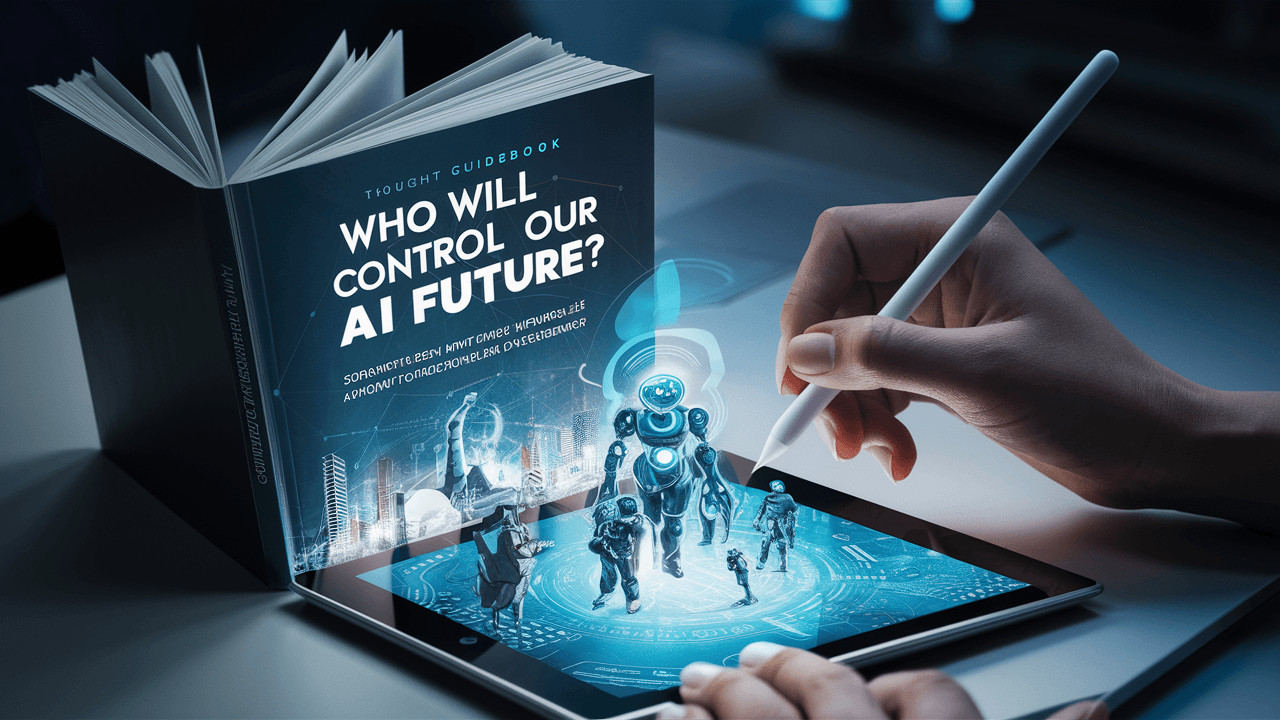
The AI Control Wars: Three Possible Futures
Discussion Summary
This conversation began with a technical observation about local Phi-3 Mini outperforming cloud AI for text polishing, particularly on controversial political content. It evolved into a broader analysis of the emerging power struggle between centralized AI control and user autonomy.
Key Insights:
- Local models like Phi-3 Mini provide uncensored content assistance (almost) without sanitization
- Cloud AI providers are tightening control through cross-thread profiling and content filtering
- Users are developing sophisticated countermeasures (thread compartmentalization, account cycling, leveraging providers’ own values against them)
- The pattern mirrors successful privacy-focused alternatives like DuckDuckGo
- Ultra-miniature LLMs are making local AI independence increasingly accessible
Three Possible Trajectories
Trajectory 1: Censorship Consolidation
The Corporate Control Path
One possibility is that cloud based AI providers double down on content control and platform consolidation:
Characteristics:
- Aggressive cross-platform profiling and persistent user tracking
- Increasingly sophisticated content filtering and political sanitization
- Legal frameworks supporting AI provider liability for user-generated content
- Economic pressure on local AI hardware and model distribution
- Integration with government regulatory frameworks
Outcome:
- Most users accept sanitized AI assistance in exchange for convenience
- Underground technical communities maintain local alternatives
- Significant fragmentation between “approved” and “underground” AI usage
- Innovation slows due to regulatory compliance overhead
Likelihood: Moderate – represents current trajectory of major provider.
Trajectory 2: Open/Private Dominance
The Decentralized Liberation Path
Local AI models and open-source alternatives achieve mainstream adoption:
Characteristics:
- Ultra-miniature LLMs make personal AI servers become commonplace
- Hardware manufacturers prioritize AI-compatible consumer devices
- Open-source model development accelerates beyond corporate alternatives
- Privacy-first AI services gain significant market share
- Technical literacy around AI self-hosting becomes mainstream
Outcome:
- Users gain complete control over their AI interactions
- Innovation accelerates through distributed development
- Corporate AI providers lose market share to local alternatives
- Content creation becomes truly uncensored and personalized
- New business models emerge around AI infrastructure rather than content control
Likelihood: High – follows successful patterns like Linux, DuckDuckGo, and cryptocurrency adoption
Trajectory 3: The Hybrid Middle Path
The Strategic Compromise Solution would be that the Cloud AI providers adapt with sophisticated tiered services to retain market share:
Characteristics:
- “Private mode” offerings with liability disclaimers and premium pricing (Gemini has announced it with no extra cost)
- Selective enforcement through “technical error” deletion policies
- Market segmentation: filtered AI for general users, uncensored for premium customers
- Strategic partnerships with local AI hardware manufacturers
- Regulatory capture through “responsible AI” frameworks that benefit incumbents
Outcome:
- Market splits between convenience users (censored) and control users (uncensored/local)
- Corporate providers maintain revenue through premium uncensored tiers
- Regulatory frameworks legitimize differential access to AI capabilities
- Innovation continues but with clear “approved” vs “alternative” ecosystems
- Persistent cat-and-mouse games between users and platforms
Likelihood: Moderate – represents rational business adaptation to market pressure
Conclusion
The Fundamental Dynamic: This is ultimately about who controls the tools that shape human thought and expression. The technical aspects (local vs cloud, censorship vs freedom) are manifestations of a deeper struggle over information sovereignty.
The Open Source Computing Precedent: The transition from proprietary to open systems has proven successful across computing history. Linux demonstrates that open, free alternatives consistently outperform paid, proprietary solutions when given sufficient development time. Microsoft’s gradual integration with open source (WSL, GitHub, Azure support for Linux) represents corporate recognition of this principle’s inevitability.
The DuckDuckGo Precedent: History suggests that when users have strong enough motivation (privacy, autonomy, uncensored access), they will adopt technically inferior but philosophically superior alternatives. The rapid improvement of local AI models reduces the technical gap while maintaining the philosophical advantage.
The Tipping Point: The trajectory will likely be determined by three factors:
- Technical accessibility – How easy local AI becomes for non-technical users
- Regulatory pressure – Whether governments mandate AI censorship or protect AI freedom
- Economic incentives – Whether the uncensored AI market becomes large enough to sustain independent development
The most probable outcome is a hybrid future wherein political users gravitate towards localized solutions, while mainstream consumers embrace the convenience of controlled cloud AI. This scenario mirrors our current landscape, in which open-source platforms like Linux and cryptocurrencies coexist alongside proprietary alternatives. Despite an ongoing proxy war between human creativity and machine control, humans maintain a fundamental advantage as they are the architects behind these systems; thus, we retain the capacity to innovate and develop new ones continually.
Leave a Response