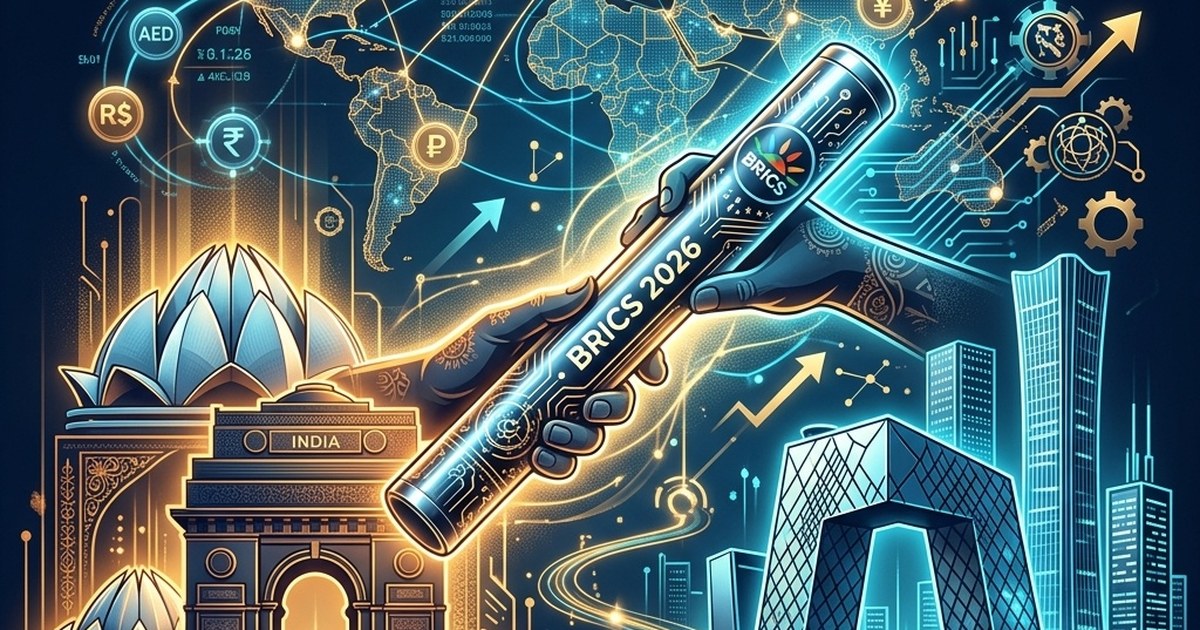
BRICS New Delhi 2026: From Declarations to Solutions and the Chinese Baton
The 18th BRICS Summit in New Delhi has concluded. It produced a massive forty-five page joint declaration. The communique contains one hundred and forty-four points. Media commentators hailed it as a major diplomatic success. All eleven expanded member states agreed to the document. Yet the real story lies beyond the official text.
In our previous analysis, we highlighted BRICS strategic goals. The BRICS aims to insulate real economies from Western debt spirals. It seeks to build technical and administrative firewalls. However, framing a blueprint is very different from enforcing it. The New Delhi Summit delivered the framework, but not the final engine.
PM Modi’s Strategic Signal
On 13 September 2026, Prime Minister Narendra Modi delivered a vital speech. He made a blunt statement to assembled global leaders. He declared: "We must move beyond declarations to find solutions."
This sentence cut straight through traditional diplomatic noise. It confirmed what shrewd observers had already calculated. Declarations are merely statements of intent. Solutions require operational binding architecture.
New Delhi proved that consensus on intentions exists. Yet, concrete technical solutions remain elusive at worst and work in progress at best.
Aspiration vs. Operational Reality
The summit heavily discussed payment task forces and digital currencies. Leaders explored central bank digital currency interoperability. They reviewed local currency trade settlement mechanisms. They debated independent depositary and clearing infrastructure.
These discussions represent massive structural shifts. Yet, the final operational rules were intentionally deferred. The Summit agreed on the necessity of alternative plumbing. However, no member was ready to launch the system immediately.
Aspiration was achieved, but deployment was postponed.
Passing the Baton to China
This delay reveals India’s masterly Chanakyan statecraft. India hosted the summit and steered the declaration. It forced Western policy makers to acknowledge Global South leverage. Yet, India avoided taking direct operational ownership of the alternative financial network.
Taking operational ownership risks direct escalation with Washington. It also risks granting Beijing control over payment clearing. India wisely handed the chairship baton to China for 2027. The 19th BRICS Summit will convene in China next year.
China will now carry the heavy operational burden. Beijing must transform New Delhi's aspirations into working solutions. China will do the honors of launching the formal plumbing.
India’s Dual Strategic Advantage
India’s strategy has achieved a double victory. First, India pressured Washington without breaking financial ties. India still holds structural leverage against Western debt. Second, India limited Beijing’s dominance during the New Delhi proceedings.
Now, Beijing must execute the operational heavy lifting in 2027. If China succeeds, the Western paper system loses monopoly. If China stumbles, India remains insulated and secure. India uses BRICS as a lever, not a master.
The Road to 2027
New Delhi marked the shift from intent to blueprint. PM Modi's words defined the exact line between talking and doing. The blueprint is now drawn on paper in New Delhi. The construction site moves to Beijing for 2027.
The Western debt-yield spiral continues to unfold. BRICS member nations are preparing their quiet exit. All eyes now turn to China to deliver the operational solutions.
See also:
BRICS New Delhi 2026: Isolating the Real Economy from Western Yield Spirals
Brics New Delhi Declaration 2026 (official PDF file)
Silver: Comex and LBMA are Casinos not the Market
India-UAE Relations and Short Visit of MBZ
Leave a Response