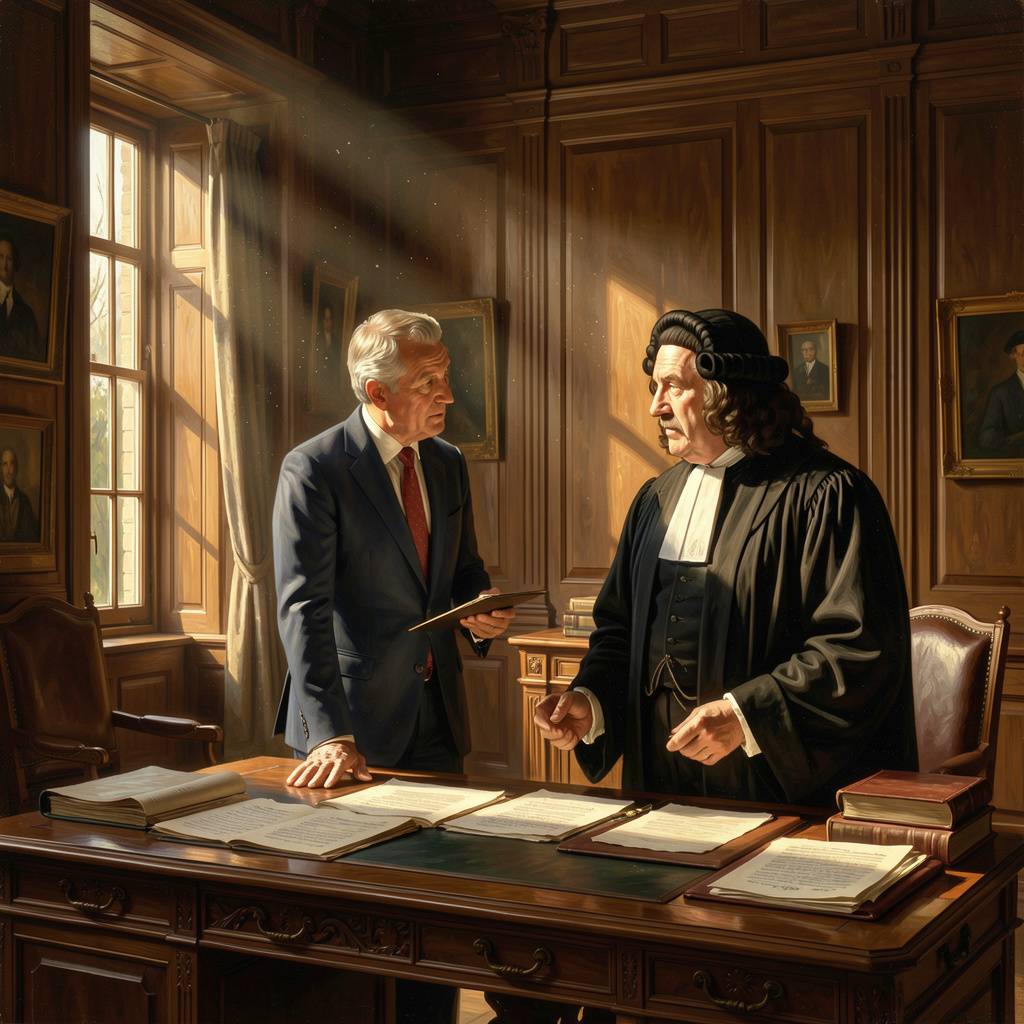
Designation of Senior Advocate
Senior advocate designation system in India follows Queen/King's Counsel in the UK even though it is entirely a misfit in India.
England has two distinct classes of legal practitioners. A solicitor handles direct client contact, prepares briefs, and drafts pleadings. They do the everyday work of an Indian advocate, minus court arguments. Barristers handle the oral arguments and formal legal consultation.
In England, the King's Counsel designation is conferred exclusively on barristers. These barristers do no drafting and deal with no clients directly. Instead, they act strictly on the instructions of a solicitor.
For all practical purposes, a Senior Advocate in India enjoys one massive advantage: precedence. If several lawyers appear before a judge, the senior speaks first. It does not matter if he represents a respondent in the case.
This privilege is known as the right of first audience. A King's Counsel in England holds similar privileges. However, their systems developed through entirely different histories.
Let us delve deeper to understand the problem.
History of King's Counsel
When a barrister becomes King's Counsel, he must wear a gown of black silk. This costume makes him immediately visible from a distance across the courtroom.
The story of the silk begins in 1597 with personal ambition. Sir Francis Bacon wanted special precedence in English royal courts. Queen Elizabeth the First granted his wish through a royal patent.
He became the first Queen's Counsel in history. Later monarchs formalized the rank to retain elite barristers for Crown business. These favored lawyers wore gowns of rich black silk. The phrase "taking silk" was born from that royal vanity.
For the next four centuries, the system operated on pure patronage. The Lord Chancellor presided over the entire affair like a feudal lord. He was simultaneously a cabinet politician and the head of the judiciary.
Every year, ambitious barristers waited anxiously for his favor. There were no formal application forms. There were no written criteria or objective interviews.
Instead, the Lord Chancellor conducted an opaque ritual called "secret soundings." He whispered with senior judges and benchers behind the heavy oak doors of London. They traded opinions over dinner in the Inns of Court. If a senior judge disliked a barrister's demeanor, that lawyer was quietly blackballed. It was the ultimate closed shop of the British Empire.
By the turn of the twenty-first century, the facade finally cracked. Modern Britain began asking hard questions about fair competition and transparency.
In 2001, the Office of Fair Trading published a devastating report. It condemned the silk system as an anti-competitive cartel. The report showed that the title artificially inflated legal fees for ordinary citizens. Worse, it was a state-sponsored seal of approval handed out through cronyism.
The controversy exploded into a full political crisis. In 2003, the British government took an extraordinary step. Lord Chancellor Derry Irvine suspended the entire appointment process. Ministers openly threatened to abolish the historic rank forever.
The English bar panicked. Barristers realized that the historic title was about to die. To save the silk, they had to surrender their feudal privileges. They agreed to take the appointment power away from judges and politicians entirely.
India, however, still follows the archaic system London discarded.
Senior Advocate
The Advocates Act of 1961 promised to create a single, unified bar. Section 29 abolished old colonial divisions like pleaders, mukhtiars, and vakils. It declared that there would be only one class of practitioners: advocates.
Yet, Section 16 immediately revived the British King's Counsel framework under an obscure name. That title was "Senior Advocate." In court corridors, they are simply called "Designated Seniors."
In England, the division of labor, as mentioned above, is structural: - Solicitors deal directly with clients, prepare the brief, draft pleadings, and handle transactions. - Barristers do not take direct instructions or draft pleadings. They are briefed by solicitors solely to argue in court.
Importing that model into India was forcing a square peg into a round hole. An Indian advocate handles every aspect of a case from start to finish.
Superimposing British barrister curbs on Indian advocates created an artificial feudal aristocracy. It cripples trial lawyers while rewarding elite appellate cartels.
The Problem
The system is not broken. It is working exactly as it was designed to work. It was never designed to be an objective, functional accreditation of legal skill. From day one, it was conceived as an instrument of pure patronage. It is operating like a patronage of bench.
The Core Conflict: Patronage vs. The "Functional" Pretense
1. A Monarchical Prerogative Transferred to Judges
In England, "taking silk" was royal patronage dispensed through the Lord Chancellor. In India, Section 16 transferred that monarchical prerogative directly into the hands of judges. It is an institutionalized spoils system. It allows judges to create a loyal, dependent aristocracy around the bench.
2. The False Claim of "Functional Designation"
The entire farce begins because the judiciary defends royal patronage as a functional merit title. If a title were functional, it would empower the lawyer's daily craft. Instead, the designation legally disarms the lawyer: no vakalatnama, no drafting, no solo appearances. It is purely ceremonial.
British however did reform the system in 2005.
British Reforms of 2005
In 2003, Lord Chancellor Derry Irvine halted all silk appointments amid public outrage. His successor, Lord Falconer, launched a comprehensive public consultation paper in July 2003. The government received 376 formal responses demanding an end to judicial secrecy.
In May 2004, Falconer issued a landmark written statement to the House of Lords. He declared that the government should no longer assess or select legal candidates. The Law Society and Bar Council negotiated a historic compromise for a transparent scheme.
In 2005, an independent King's Counsel Selection Panel formally took charge. Crucially, independent lay members sit alongside retired judges and senior practitioners. These non-lawyers were appointed specifically to break up the old-boys' network. Sitting judges lost their secret veto power forever.
Today, the selection process in England is transparent, rigorous, and self-funding through applicant fees. Solicitors with higher rights of audience and employed barristers are fully eligible to apply. Applicants are judged against five clear, published competencies:
-
Understanding and using the law.
-
Oral and written advocacy.
-
Working with others.
-
Integrity.
-
Understanding and demonstrating diversity.
Candidates submit detailed case records and list judicial, professional, and client referees. The independent panel cross-examines these references and conducts structured interviews. The panel sends its final recommendations to the Lord Chancellor. The Lord Chancellor merely passes the names to the King. The monarch formally issues Letters Patent at Westminster Hall.
England recognized that secret soundings were corrupting and dismantled them twenty years ago. India stubbornly clings to the discredited Victorian model London threw away.
Reforms in India
The entire system of designating Senior Advocates in India operates like a black box. It runs on unchecked discretion, backroom lobbying, and zero public transparency.
Under Section 16 of the Advocates Act, 1961, High Courts hold complete power. There was a time when the Chief Justice held absolute sway. In those days, judges other than the Chief Justice were called puisne or junior judges. That title was later dropped in favor of "colleague judges." Now, the Full Court decides by secret vote behind closed doors.
No one knows why one lawyer is picked while another is rejected. Merit is not the governing currency of this institution. Patronage and personal proximity to the bench decide everything.
Defenders of the system claim that things have changed. When global winds blew toward transparency, the Supreme Court moved to protect its turf. Parliament cannot intervene because the Court fiercely guards its supremacy through the collegium system. Instead, the Supreme Court used a Public Interest Litigation to introduce internal guidelines.
Senior Advocate Indira Jaising filed a petition challenging the opaque designation system. In 2017, the Supreme Court laid down structured criteria for senior designations. It mandated Permanent Committees and introduced a 100-point evaluation matrix. Points were allotted for years of practice, reported judgments, pro bono work, and interviews. In 2023, the Court fine-tuned these rules, reducing interview marks and adjusting criteria.
Yet, the Indira Jaising guidelines proved to be an optical illusion. The reform merely institutionalized the black box behind bureaucratic paperwork. The Full Court still retains secret voting power to overrule or confirm selections. Judges preserved their sovereign discretion while cloaking it in the language of merit.
Around 2010, courts like the Delhi High Court began considering district court advocates. Other High Courts promised to look beyond their own appellate corridors. Yet, this channel remained a cosmetic concession. A handful of token designations gave the system plausible deniability. The overwhelming majority of trial advocates remain completely invisible to the higher judiciary.
However, the system favours overworked and overpaid lawyers. There is no system to assess quality except the interview which has reduced marks now.
The Realities: Money, Patronage, and the Trial Bar
The selection process openly favors wealth over legal substance. High Courts mandate that applicants submit years of Income Tax Returns. The rules enforce steep annual income thresholds for eligibility. This requirement turns professional recognition into a commercial wealth test. It heavily benefits corporate arguing counsel billing corporate clients vast sums.
Grassroots trial lawyers serve common litigants for modest, affordable fees. They take on legal aid matters and unrepresented litigants. The system penalizes their public service by declaring their income insufficient.
The system also exploits statutory loopholes for favored insiders. Section 16(2) permits designation for "special knowledge or experience in law."
This provision has become an open highway for judicial patronage. Some have received Senior Advocate designations without ever stepping foot inside a courtroom. They never conducted a cross-examination or argued a contested a trial. But they engage in Bar politics and get elected as president of an influential bar association.
Meanwhile, authentic courtroom warriors spend decades in district courts completely ignored.
Example: A Gown at Hundred
Recently, the legal world witnessed a glaring illustration of this closed system. Social media erupted in celebration when advocate P. B. Menon received his senior gown. At 100 years of age, he was designated a Senior Advocate by the Kerala High Court.
He had spent over 76 years practicing civil law in Palakkad trial courts. In 2023, he entered the Guinness World Records for the longest legal career. Viral posts framed the news as an inspiring triumph of dedication. In reality, this story is a devastating confession of systemic failure.
The timing of Menon's designation reveals a dark practical joke. The Bench is so inadequate that it could not find a meritorious lawyer for 76 years? But that is beside the point if we ignore facade of merit and treat it as a patronage. However, the patronage has its price in practical life. Under Bar Council rules, Senior Advocates operate under rigid procedural bans:
-
They cannot file a vakalatnama for a client.
-
They cannot draft pleadings or plaints directly.
-
They cannot appear in court without an instructing advocate.
These restrictions fit appellate arguing counsel sitting in plush chambers. They do not fit an everyday trial lawyer in Palakkad. By designating Menon at age 100, the system effectively disarmed him. The gown prohibits the exact trial work he conducted for seventy-six years.
P. B. Menon did not receive his gown because the system works. He received it because a Guinness World Record forced the court's hand. The institution could no longer hide its neglect of a living legend. He was not designated to empower his daily practice. He was knighted as an ornamental prop to burnish the court's benevolent image.
The Indira Jaising point system also explains why trial lawyers like Menon are ignored. The rubric awards heavy points for judgments reported in appellate law journals. Trial court rulings are almost never published in legal digests. A trial lawyer can conduct brilliant cross-examinations without a single reported citation. The point system rewards appellate paper visibility, not authentic trial mastery.
Designating a trial veteran at 100 is not an act of grace. It is an institutional guilt masquerading as an honor.
The Senior Advocate designation remains an opaque, elitist cartel. It rewards wealth, judicial nepotism, and ghostwritten books over genuine trial craft. Until this black box is dismantled, every such ceremony remains anything but justice.
Jugaad
Rich Senior lawyers in India bypass the rules by keeping chamber lawyers to do 'solicitor' work. The system has turned on its head where the senior advocates actually engage regular 'advocates' who handle all the work other than arguments in court.
Thus, a Barrister is engaging the Solicitor in India. There is no rule to prevent this. The reason is obvious. This jugaad is ignored because the designation is not of any practical value. It is a patronage by the Bench. It remains so.
References
1. House of Lords Written Statement (2004): Lord Falconer of Thoroton, Secretary of State for Constitutional Affairs, Queen's Counsel, Hansard Written Statements, 26 May 2004. Parliament Record. 2. Political and Reform Backdrop: Date for QCs' Round Nears, The Law Society Gazette, 3 June 2004 with criticism of secret soundings and the Office of Fair Trading's call for abolition. Law Gazette Article. 3. Modern KC Competency Guidance: King's Counsel Appointments, Application Guidance and Competencies, March 2025. KC Appointments Guidance. 4. Selection Panel Evaluation Report: King's Counsel Selection Panel, Report to the Lord Chancellor on the 2024-25 Competition, January 2026. KC Panel Report. 5. Indian Supreme Court Precedents: Indira Jaising v. Supreme Court of India, (2017) 9 SCC 722; modified in (2023) 8 SCC 1.
Leave a Response