**The Colonial Table Reserves the Right to Exclude: **
Dress Codes, Speech Codes, and the Postcolonial Banquet
In the age-old Indian hospitality scene, where butter chicken meets British binders, a curious phenomenon flourishes—one serving up colonial hangovers not on plates but in protocols. Welcome to the layered performance of power scripted by accents, attire, and playlists, where even your salwar-kurta might be the uninvited guest.
The Gatekeepers’ New Clothes: Dress Codes as Colonial Echoes
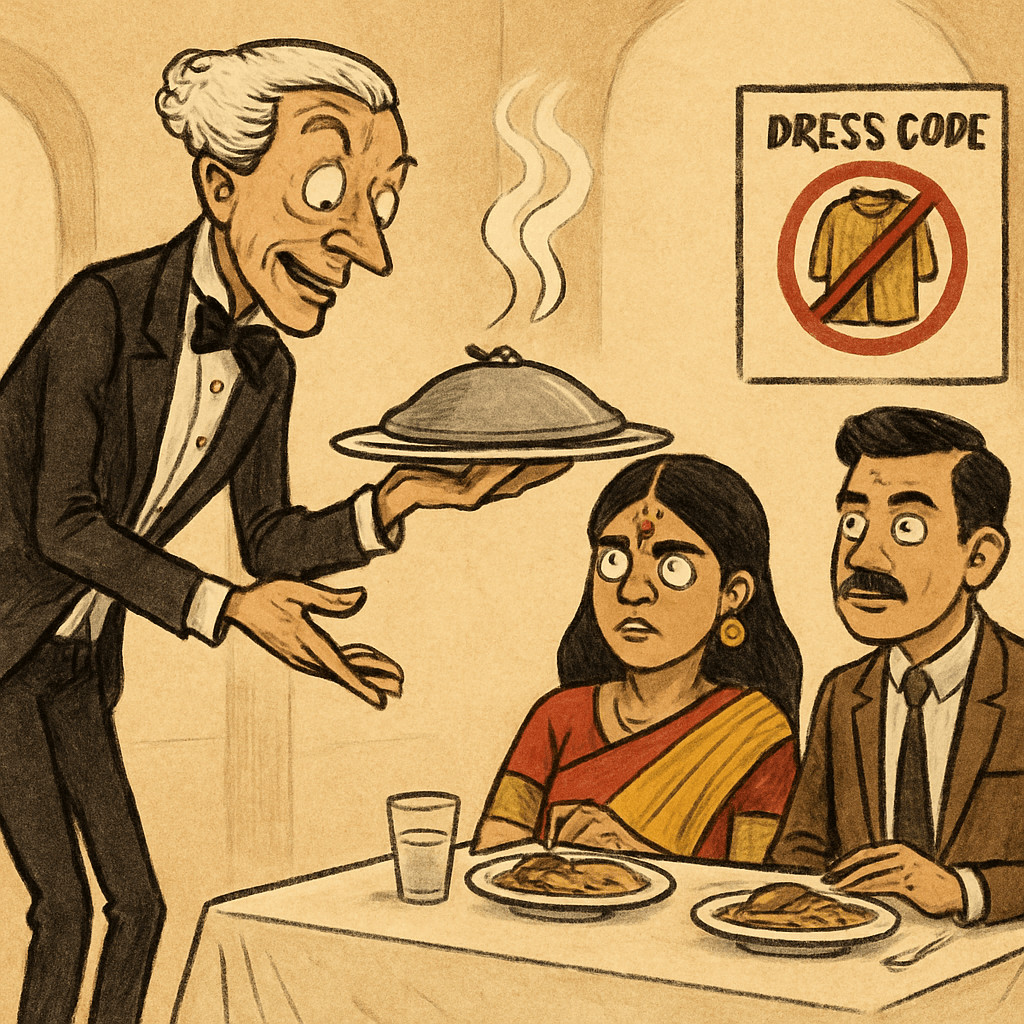
Long gone are blunt signs declaring, “Dogs and Indians not allowed.” Instead, a new breed of gatekeepers brandish the “Dress Code Enforced” disclaimer like a velvet whip.
Recently, at a shining restaurant in Delhi’s Pitampura—“Tubata”—a couple faced this very modern gatekeeping. The woman, enveloped in the humble yet dignified salwar-kurta, was asked to stay out while patrons parading revealing Western attire sailed past unchallenged. The man’s recorded protest echoed through social media: “They insulted Indian culture and disrespected a woman.” Delhi’s Chief Minister, Rekha Gupta, promptly ordered a probe, calling the act “unacceptable.” The restaurant swiftly apologized, promising no further ethnic-wear exclusions, even offering Raksha Bandhan discounts for the culturally attired.
This incident punctuates a persistent colonial script: Western aesthetics remain the gatekeepers’ gold standard, while Indian attire is either “off-brand” or “cultural contraband” —at best a tolerated exception, and at worst a trigger for exclusion.
The Missi Roti Doctrine: Culinary Citizenship or Cultural Contraband?
Our satirical memoir hails from Delhi’s 1992 Hotel Meridian, where a father-son duo navigates the same colonial playbook. Draped in kurta-pajama and speaking impeccable Queen’s English, the father’s linguistic prowess becomes the ticket past velvet ropes that shun his ethnic silhouette.
They ordered and were served baked vegetable in Continental Restaurant. Missi Roti was brought in from Desi restaurant “Dawat”. Now past the “dress code” barrier, the hospitality knew no bounds in service.
This is The Missi Roti Exception : where ethnic wear is grudgingly tolerated only when paired with elite English and implied power. “He must be a NETA,” another host muttered approvingly, recognizing that power language overrides dress code. Doctrine Name The Missi Roti Exception Definition Ethnic wear tolerated only if paired with elite English and status. Trigger Phrase “He must be a NETA.” Cultural Override Fluent English trumps dress code. Culinary Outcome Missi roti served alongside English soufflé. Institutional Logic Gatekeeping collapses when power is performed. Satirical Diagnosis Aesthetic profiling beaten by linguistic dominance.
Entry to Delhi’s posh restaurants is less about what one wears, more about who one sounds like. The kurta-pajama farmer? Denied. The kurta-pajama fluent English speaker? Revered. The three-piece-suited poet? Ignored. The suit beside a powerful political patron? Admitted.
Waiters Speak Empire: The Accent, The Apology, The Tip
Inside, colonial service scripts play out with unsettling precision. The waiter’s accent is neutralized, rehearsed—the colonial English , engineered not to serve but to soothe imagined white patrons, and signal class compliance to domestic elites. “Sir,” “Madam,” and scripted apologies rain down like perfunctory prayers, ritualizing guilt and servitude.
Tipping becomes less transaction, more tribute. Digital tipping interfaces peppered with folded hands and “thank you, kind sir” pop-ups encode colonial hierarchies into modern UX.
Menus and Music: Fusion or Confusion?
Menus blur regional identities into bland continental or ‘oriental’ catch-alls. “North Indian” and “South Indian” clustered like buffet options for Buckingham Palace, regional gems erased unless trendy. Playlists default to Ed Sheeran in a Rajasthani thali house—because if empire is gone, its Spotify algorithm lingers.
From Incident to Institution: The Contemporary Stakes
The Tubata incident surfaced the sharp edges of these coded hierarchies. As Indian attire clashed with a Westernized restaurant ethos, the outrage was swift, but the underlying bacterial colonial mindset remains endemic. Public pressure forced a reversal, but how many deny entry silently, coded by attire, accent, or accentless attire?
Final Pour: Decolonize The Script, Not Just The Spice
Indian hospitality’s true revolution lies not in spices or soufflé finesse, but in tearing down colonial scripts—from dress codes to dialogue—reclaiming spaces for cultural pride, linguistic plurality, and genuine inclusivity.
So, next time you hear “May I take your order, sir?” with clipped British cadence, or see a “Dress Code Enforced” sign quietly excluding heritage, remember: the table is set, but the performance needs rewriting. Otherwise, every meal is a reenactment. Every salwar-kurta an act of subtle defiance.
And every “sir” is a whisper from the past.
Leave a Response