O Romeo (2026) Movie: A Missed Opportunity
Movie making is not just art; it is a craft required to build a successful film. There is no single formula for success. The craft lies in combining all the right elements without overdoing any single one.
O Romeo (2026) arrived in theaters with massive expectations. Produced by Nadiadwala Grandson Entertainment, it had all the ingredients of a blockbuster.
The film boasts spectacular production design and Hollywood-grade fight choreography. It features a career-defining performance by Shahid Kapoor and a compelling screen presence from Tripti Dimri.
Yet, the film managed to snatch defeat from the jaws of victory at the box office. Analyzing O Romeo through a scientific framework reveals why equal resources yield opposite fates.
The Glamorized Villain
O Romeo shines brightly in its character design for the antagonists. The lead villain, Jalal, embodies the glamorized villain factor with remarkable flair.
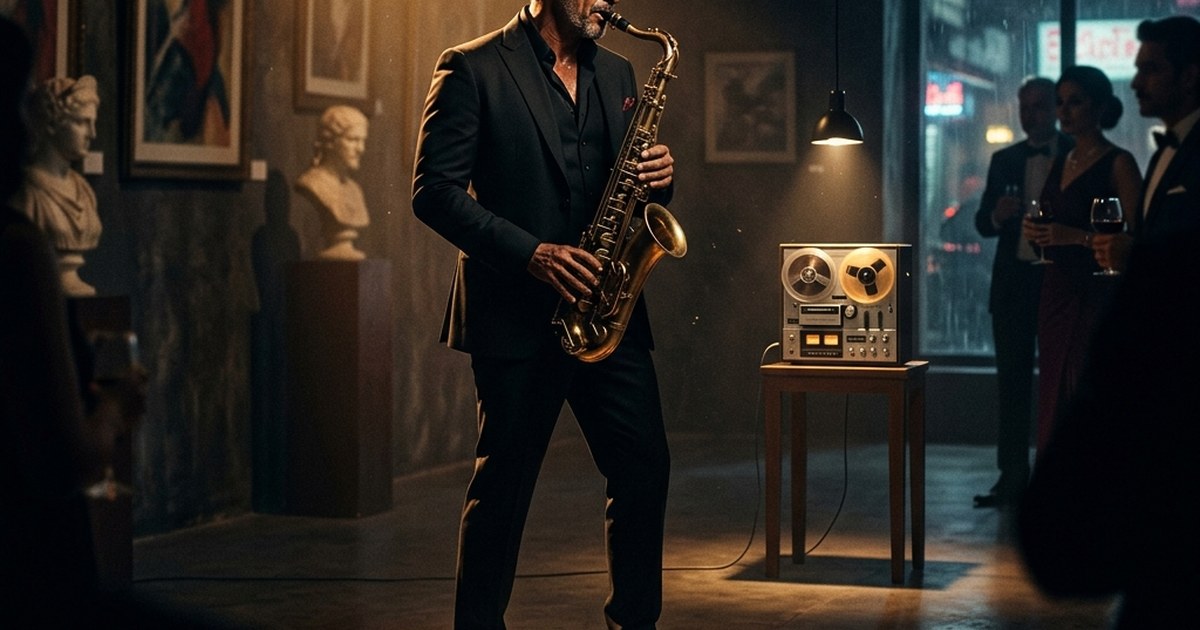
One brilliant, original scene highlights Jalal's dark charm: Jalal performs passionately on a saxophone in a public art gallery while the surrounding crowd applauds enthusiastically at his musical genius. Then, a subordinate villain named Pathare secretly switches off a hidden tape recorder. The tape recorder was playing the actual music all along—Jalal was merely miming the performance.
The crowd continues clapping without hesitation, and Pathare claps along too. It is a darkly hilarious, original revelation of villainous soft vanity and social intimidation.
The Legend of Ustara
Nadiadwala Grandson delivered a top-tier visual spectacle. The action sequences rival modern Hollywood thrillers in scale and precision.
Shahid Kapoor outdoes himself in the lead role, completing a total transformation from a romantic chocolate hero into a raw gangster. He portrays an original criminal nicknamed Ustara (the Razor), whose signature weapon—a razor blade—gives him a terrifying, unique edge. He handles high-intensity action and emotional weight with absolute conviction.
Tripti Dimri brings a striking screen presence. She could have done much more, but the script was too busy with secular themes to leave space for her. Thus, the script fails to craft her character arc with proper depth. The supporting cast also performs admirably, but the script ultimately lets them down.
Shoehorned Nationalism
The film also suffers from unnecessary plot additions. O Romeo could easily have stood on its own as a crisp Mumbai crime thriller.
Instead, the filmmakers made a last-minute decision to introduce Pakistani ISI and Indian IB agencies, attempting to ride the nationalist box office wave created by blockbusters like Dhurandhar. This artificial insertion reflects the old saying about getting a fingernail cut just to claim martyrdom.
The shoehorned intelligence agencies added narrative clutter, diluting the core story without adding genuine patriotic stakes. Viewers saw right through the superficial effort.
Shoehorned Secularism
Movies in India often suffer from a forced brand of secularism. The term has come to mean something radically different from the rest of the world—here, it frequently translates into special narrative status for one community. Movies go out of their way to ensure it, not to serve the story, but to serve the ideology itself.
Hindu identity often becomes shorthand for corruption, villainy, or moral rot, while Muslim religious expression becomes a marker of authenticity, nobility, or suffering. Characters carry their faith like a burden of sincerity, reciting the kalma or invoking Allah in moments of crisis, which the film treats with reverence. It's a sleight of hand where "secularism" becomes the alibi for a narrative that privileges one identity as morally superior.
Meanwhile, the Hindu "Mr. Sharma" archetype is presented as the moneyed, corrupt figure—a degraded portrait of all ritual without morality.
O Romeo forces religious identity into the narrative not to explore it, but to reinforce these tropes. In doing so, it cluttered its own storyline, which was fragile right from the beginning.
On the artistic anvil, there are three major failures:
Failure #1: The Missing Anchor Character
The primary reason for the film's commercial collapse lies in narrative architecture. A successful film requires an Anchor Character to bind plotlines together.
As stated in the scientific framework: a strong anchor can carry a weak story, but a great story cannot replace a missing anchor.
O Romeo lacks a single character who stays present across the entire narrative. Instead of a unified story, the film becomes an amalgam of disjointed sub-plots. Without an anchor, the audience feels no narrative gravity, leaving viewers wondering whose story they are actually watching.
Failure #2: Character Schema Breakdown
Wardrobe and weaponry are essential components of character schema. Signature weapons define iconic cinematic figures.
O Romeo introduced a brilliant concept with Ustara's razor blade, giving Shahid's character a distinct visual identity. However, during the climax, he abruptly abandons his signature blade in favor of generic revolvers and standard gunfire.
This arbitrary change destroyed his unique character schema, reducing an iconic figure into a generic Hollywood-style shooter. The apparent reason for this shift was to copy a Hollywood cliché where the male and female lead team up for a joint shooting spree.
Failure #3: Spectacle Over Narrative Flow
Action should serve the narrative, not interrupt it. The movie over-relies on pure action spectacle. To accommodate grand fight sequences, narrative flow is repeatedly compromised, rendering the storytelling erratic and disjointed.
When fight scenes displace character development, emotional engagement drops. Even the most impressive villain cannot salvage a movie that lacks emotional anchoring.
A Failed Scientific Hierarchy
O Romeo possessed every visual tool needed for a massive hit. Yet, by sacrificing storytelling, character weapon schema, and scene flow for fight sequences and forced geopolitics, the film collapsed under its own weight.
Cinema operates on a strict hierarchy and cannot be forced to serve too many competing agendas. Its core aim must remain entertainment. While social messaging is possible, controversial narrative-building at the expense of storytelling inevitably weakens the final product.
O Romeo remains a fascinating visual spectacle that ultimately missed both the scientific and commercial mark.
See also:
How to Review Movies? Is There a Scientific Method?
Hollywood May Follow Down the Cliff After Urdu Cinema Bollywood
Leave a Response