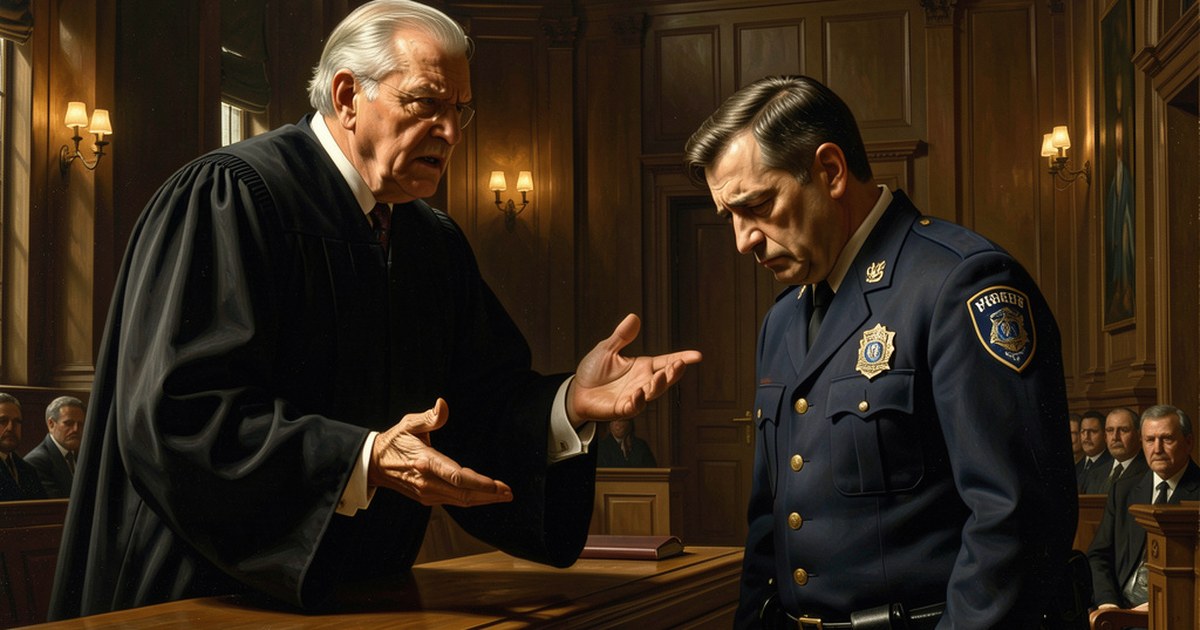
High Court Reprimands Karnataka Police for Being Overzealous on Social Media Posts
The police are under state government control as per the Constitution. They function under state command as per the Police Act. Many reform proposals suggest an independent police force. However, we have seen what such independence brings. The judiciary declared independence from the executive. It now acts as a sovereign within a sovereign republic. A better alternative is ensuring police act strictly within legal boundaries.
However, in practice, police often break legal limits to please the ruling government. A similar situation arose in Karnataka. The High Court stepped in to direct the police onto the right path. This is how events unfolded.
1. Facts
Kunal Kamra, a standup comedian, wanted to hold a show in Bengaluru. Members of the Hindu Rashtra Samanvaya Samithi submitted a formal representation to Whitefield Police Station. They requested the cancellation of the comedy show scheduled in the Whitefield area.
On August 3, 2026, the organizers relocated the event to another venue. Following this relocation, Hindu activist Mohan Gowda published a post on Facebook. He described the event cancellation as a victory for Hindu unity. The post did not contain any call to violence or illegal activity. No member of the public filed a complaint regarding this online post.
2. Police Action
At 2:00 AM on August 4, 2026, a constable registered a suo motu FIR at Whitefield Police Station. The constable claimed that the Facebook post generated communal disharmony.
Speech offences are non-cognizable offences by nature and require a magistrate's order for investigation. The police bypassed this legal requirement and conducted no preliminary inquiry under Section 173(2) BNSS.
To bypass legal restrictions on speech offences, police invoked severe provisions of the Bharatiya Nyaya Sanhita. They registered the case under Section 217 for public nuisance and disobedience. They also applied Section 353(2) for publishing statements conducive to public mischief.
On August 6, 2026, a police team traveled 350 kilometers from Bengaluru to Udupi. The officers picked up Mohan Gowda from his residence without prior notice or warrant. They boarded Gowda's private car and accompanied him back to Bengaluru. The police later claimed that Gowda accompanied them voluntarily in his vehicle. Police served a Section 35(3) BNSS notice outside the police station after bringing him there in informal custody.
Advocates intervened after Gowda was held in custody until August 7, 2026.
3. Reprimand by High Court
Mohan Gowda challenged the FIR through Writ Petition Number 25680 of 2026. Advocate Girish Bharadwaj represented Mohan Gowda before the Karnataka High Court. The matter came up for hearing on August 29, 2026.
Justice M. Nagaprasanna of the Karnataka High Court heard the writ petition. The High Court immediately stayed all criminal proceedings against the petitioner. The judge issued strict orders summoning senior police officers to appear in court.
The Deputy Commissioner of Police, Assistant Commissioner of Police, and Investigating Officer appeared. The court severely criticized the police for acting with procedural lawlessness. The judge questioned the locus standi of the police constable who filed the complaint. He observed that the constable generated imaginary disharmony overnight within himself after reading the post.
The judge questioned the DCP directly by asking who gave the orders to travel to Udupi. The court asked the DCP: "You man the division, is this the way you are manning it?" The court completely dismantled the police claim of voluntary presence by the accused. Boarding a citizen's private car constitutes illegal restraint and tacit custody.
The court ruled that serving a Section 35(3) BNSS notice after detention is illegal. Statutory notice must afford time to comply rather than serving as a trap. Justice Nagaprasanna rejected the practice of blaming only subordinate sub-inspectors and constables. He held senior supervisory officers directly responsible for division lawlessness.
The judge warned that wearing a uniform does not grant immunity from constitutional discipline. He criticized police lawlessness by asking: "Is this police administration or police absolutism?" The court pointed out a systemic pattern of abuse at Whitefield Police Station. The judge sarcastically remarked that Whitefield Police Station should be renamed Darkfield. This remark followed repeated claims by police that CCTV cameras failed due to power fluctuations.
The court cited a recent precedent involving the same station in KN Mohan Reddy. In that case, the High Court imposed three lakh rupees in personal costs on officers.
4. Directions to Entire Karnataka Police
The High Court issued the following directions to the state police administration.
The Director General and Inspector General of Police must issue a statewide circular. This circular must bind every police station across the state of Karnataka. All police officers must strictly follow Supreme Court guidelines on arrest procedures. The circular must incorporate guidelines established in the Supreme Court case Satendra Kumar Antil. It must also incorporate landmark arrest protocols laid down in the DK Basu case. Police must adhere to the Telangana High Court judgment in Nalla Balu.
The Nalla Balu judgment mandates verification of locus standi before registering speech FIRs. Police must conduct a preliminary inquiry before taking coercive action over social media posts. Any officer violating these guidelines will automatically face departmental inquiry. Constitutional courts will impose personal monetary costs on defaulting officers. Fines will be deducted directly from officer salaries rather than state funds.
It was also directed that the Director General of Police must submit a compliance report by September 25, 2026. Senior officers must appear in court again for the next compliance hearing.
5. Implications of the Judgment
This judgment establishes a firm legal precedent against arbitrary police overreach. It protects citizens from police intimidation over harmless social media commentary.
Police officers cannot register suo motu FIRs without verified complaints or statutory locus standi. The ruling stops police from converting non-cognizable speech issues into severe criminal charges.
Holding senior supervisory officers accountable eliminates the shield of subordinate scapegoating. Imposing personal monetary fines creates a powerful financial disincentive against illegal arrests. It reinforces that wearing a police uniform does not grant immunity from constitutional discipline.
The decision strengthens personal liberty guaranteed under Article 21 of the Indian Constitution. Statewide circulars ensure uniform legal compliance across all Karnataka police jurisdictions. The judgment restores public confidence in constitutional governance and the rule of law.
References:
1. Sri Mohan Gowda vs. State of Karnataka, Writ Petition No. 25680 of 2026 (GM-RES-482) order dated 28 August 2026 directing DCP to appear in person. 2. Nalla Balu (Durgam Shashidhar Goud) vs. State of Telangana, 2025 SCC OnLine TS 855 / SLP affirmed by the Supreme Court. 3. Satendra Kumar Antil vs. Central Bureau of Investigation, (2022) 10 SCC 51. 4. KN Mohan Reddy v. State of Karnataka, Order dated 27 August 2026 by Karnataka High Court quashing illegal arrest and imposing ₹3,00,000 in exemplary costs. It specifically ordered that the amount be paid personally by the Investigating Officer, ACP, and DCP, not by the state exchequer.
Leave a Response