A Practical Guide for Baggage Claims.
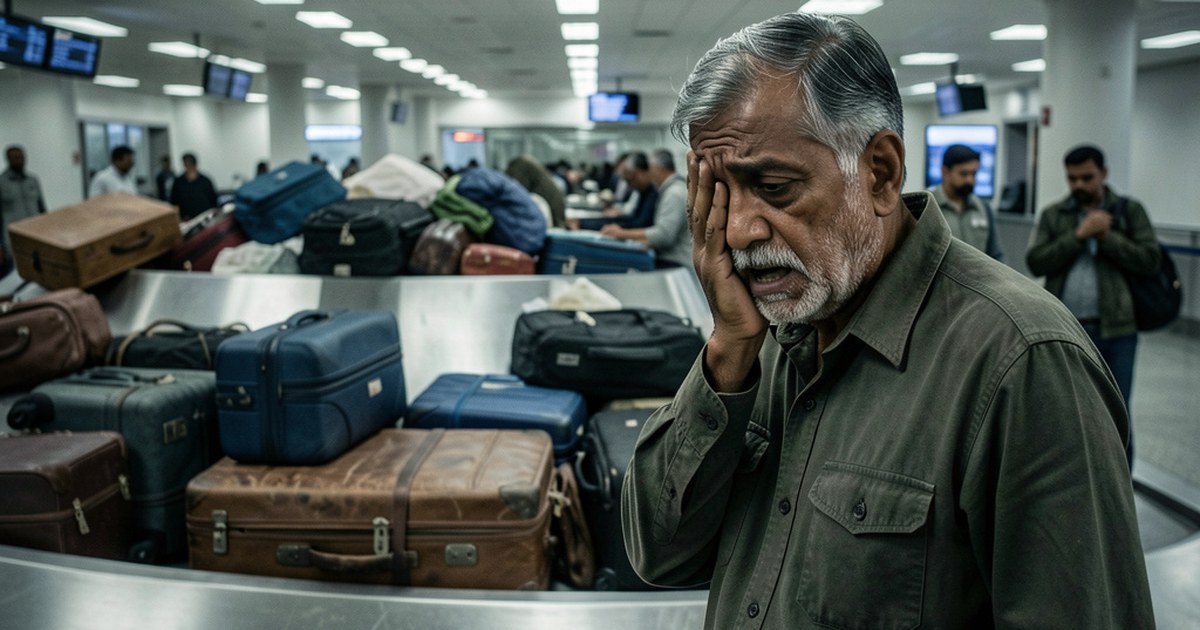
A person flies in for their own wedding, or a close relative's. Every outfit for every ceremony is packed inside one suitcase. Jewellery, shoes, gifts, and carefully packed items travel together.
The bag never arrives, or arrives after the ceremony ends. There is no version of compensation that fixes this. The Montreal Convention pays for the bag's financial value, not the ceremony that happened without it.
Airlines only classify a bag as officially lost after twenty-one days. A wedding cannot wait three weeks for a suitcase to reappear. This is why financial liability limits and actual human costs rarely match.
Money can replace a saree or a suit. It cannot replace the photos, memories, or moments a family expected to have.
This gap between legal compensation and lived experience is well known. Travel advisors increasingly recommend carrying wedding outfits, jewellery, and essential items in cabin baggage. Checked baggage should be treated as replaceable, however painful that is to accept.
Write off Baggage
Carry anything irreplaceable, and anything whose value is functional rather than financial. Client files, medical reports, exam certificates, wedding outfits, and heirloom jewellery share this trait.
Airlines can compensate for a lost item's price. They cannot compensate for a missed hearing or a missed ceremony. Once that distinction is clear, checking such items stops making sense. Some things are worth the extra weight on your shoulder.
A case file has no resale value, so it remains completely outside every liability rule. The Montreal Convention pays for a bag's weight or declared value. A judgment copy or an affidavit has neither. Losing a file does not just cost money. It can cost the court hearing itself. Courts rarely pause because a suitcase went missing at a transit airport. For a lawyer who loses his files, the real loss is time, credibility, and client trust.
Therefore, when you hand over baggage to an airline, treat it as a total loss. Be prepared that you may not get it at your destination. If you do not feel convinced, read on.
Statistics of Loss
In 2025, airlines mishandled 4.9 bags per 1,000 passengers. That still meant 24 million mishandled bags globally in one year alone.
Delayed bags made up nearly three-quarters of all cases. Lost or stolen bags were rarer, making up about 8 percent of the total. Damaged or pilfered bags made up the rest, around 18 percent.
Mishandled baggage cost the airline industry 6.3 billion dollars last year. That works out to roughly 260 dollars in real cost per bag.
A delay is counted as resolved if a bag returns within 48 hours. For most travelers, that is a mild inconvenience. For someone traveling for a wedding, that same 48 hours can be catastrophic.
Luggage rules follow different standards depending on where you fly. Four legal frameworks matter most. The Montreal Convention sets a global floor for international flights. India, the EU, the UK, and the US each add their own layer.
The Montreal Convention Sets the Base
The Montreal Convention governs most international flights worldwide. It caps airline liability for baggage loss, damage, or delay at 1,519 Special Drawing Rights per passenger.
That works out to roughly $2,000 or €1,800, depending on exchange rates. This limit applies unless you declare a higher value at check-in. You can also buy excess valuation coverage from the airline.
The treaty does not cover items excluded by inherent defect or normal wear. Its baggage limit was raised in December 2024 from 1,288 SDRs, an increase of about eighteen percent.
Flying Within or From the European Union
EU rules add specific reporting deadlines on top of the Montreal Convention. You must report damaged baggage within seven days of receiving it. Delayed baggage must be reported within twenty-one days.
Lost baggage claims can generally be filed up to two years after your flight. Compensation follows the Montreal Convention ceiling of roughly €1,800 to €1,900.
The airline must pay for reasonable emergency purchases while your bag is missing. Save every receipt, since airlines usually ask for proof of expenses.
The United Kingdom Follows a Similar Path
UK261, enforced by the Civil Aviation Authority, mirrors the EU framework after Brexit. The same Montreal Convention baggage limit and reporting windows generally apply.
Damaged bags need a written complaint within seven days. Delayed bags need a report within twenty-one days.
If an airline denies a valid claim, the CAA can help you escalate it. UK passengers can also pursue Alternative Dispute Resolution schemes before going to court.
Domestic Travel Within the United States
The US Department of Transportation sets its own domestic baggage liability limit. As of January 2025, that limit rose to $4,700 per passenger. This figure is reviewed and adjusted for inflation every two years.
A separate 2024 DOT rule requires automatic refunds for badly delayed bags. Domestic bags delayed more than twelve hours qualify for a checked bag fee refund.
International bags qualify after fifteen to thirty hours, depending on flight length. Refunds must arrive within seven business days for credit card payments. Other payment methods must be refunded within twenty calendar days.
Domestic and Inbound Travel Within India
The Carriage by Air Act, 1972 folds the Montreal Convention into Indian domestic law. DGCA Civil Aviation Requirements, Section 3, Series M, Part VI, set domestic baggage rules.
Domestic baggage liability is generally capped around ₹20,000 per passenger. Airlines often calculate this using a per kilogram rate up to that ceiling.
Flights landing in or leaving India internationally follow the global Montreal Convention limit. That limit is currently fixed at 1,519 SDR, roughly ₹1.7 lakh per passenger.
Reporting deadlines mirror the global pattern here too. Report damage within seven days and delay within twenty-one days. You generally have two years to pursue a claim for total loss.
Every foreign carrier flying into India, including Etihad, must publish a Nodal Officer. They must also name an Appellate Authority for unresolved complaints. DGCA rules also require foreign airlines to keep a registered representative inside India.
When an Airline Is Simply Unreachable
Some airlines make contact genuinely difficult, and Etihad is a common example. Start by filing a Property Irregularity Report at the airport before you leave. Do this even if you suspect the airline will not respond later.
Next, search the airline's website for its Nodal Officer and Appellate Authority. DGCA requires every carrier flying to India to list these details.
If that contact goes unanswered, move straight to the AirSewa portal. AirSewa covers foreign carriers operating to and from India, not just Indian airlines. You can file through the website or the AirSewa mobile app.
Also send your complaint to DGCA's public feedback email address. This creates an independent record outside the airline's own system.
If weeks pass with no resolution, escalate further. File with your local District Consumer Disputes Redressal Commission through e-daakhil. Filing there is free for claims up to five lakh rupees.
If you paid by credit card, ask your bank about a chargeback. Card networks run a dispute process separate from the airline.
Keep screenshots of every failed call, email, and website attempt. This evidence shows the consumer commission that you made a genuine effort to reach them.
What to Actually Do When Something Goes Wrong
File a report with the airline before you leave the airport. Ask for a written Property Irregularity Report and keep your reference number.
Photograph your bag's condition and any visible damage immediately. Keep boarding passes, baggage tags, and receipts for any emergency purchases.
Submit your written claim within the deadline that applies to your route. Escalate to a national aviation authority if the airline refuses to respond. Consider travel insurance for items above standard liability limits.
The Simple Version
Rules differ by route, but the underlying logic stays consistent everywhere. Report problems quickly, keep documentation, and know your applicable deadline and limit. The Montreal Convention sets the floor, and local regulators add extra protection.
References:
1. Montreal Convention 1999, ICAO, full treaty text. https://www.icao.int/sustainability/SDSToolkit/Assets/Doc%207664%20-%20Montreal%20Convention.pdf 2. 2024 Revised Limits of Liability Under the Montreal Convention 1999, ICAO notification. https://www.icao.int/sites/default/files/secretariat/legal/LEB%20Treaty%20Collection%20Documents/2024_Revised_Limits_of_Liability_Under_the_Montreal_Convention_of_1999_en.pdf 3. Air Passenger Rights, European Commission, Your Europe portal. https://europa.eu/youreurope/citizens/travel/passenger-rights/air/index_en.htm 4. Aviation Consumer Protection, baggage rules, US Department of Transportation. https://www.transportation.gov/airconsumer/baggage 5. Periodic Revisions to Denied Boarding Compensation and Domestic Baggage Liability Limits, Federal Register, US DOT. https://www.federalregister.gov/documents/2024/10/24/2024-23588/periodic-revisions-to-denied-boarding-compensation-and-domestic-baggage-liability-limits 6. Refunds and Other Consumer Protections, Federal Register, US DOT. https://www.federalregister.gov/documents/2024/04/26/2024-07177/refunds-and-other-consumer-protections 7. Consumer Protection Law, baggage and the Montreal Convention, UK Civil Aviation Authority. https://www.caa.co.uk/passengers-and-public/resolving-travel-problems/how-the-caa-can-help/consumer-protection-law/ 8. Travel Problems and Rights, UK Civil Aviation Authority. https://www.caa.co.uk/air-passengers/travel-problems-and-rights/ 9. Alternative Dispute Resolution for air passengers, UK Civil Aviation Authority. https://www.caa.co.uk/air-passengers/travel-problems-and-rights/travel-complaints/alternative-dispute-resolution/ 10. Civil Aviation Requirements, Section 3, Series M, Part VI, baggage and unruly passenger provisions, DGCA. https://www.dgca.gov.in/digigov-portal/Upload?flag=iframeAttachView&attachId=tCyTvbxJNxKAIaYounFBfw%3D%3D 11. Civil Aviation Requirements, Section 3, Series M, Part II, refund rules, DGCA. https://www.dgca.gov.in/digigov-portal/Upload?flag=iframeAttachView&attachId=NEYrfyUarqXt9W7QigEe3Q%3D%3D&baseLocale=en_US 12. AirSewa grievance portal, Ministry of Civil Aviation. https://airsewa.gov.in 13. Rules and Notices, DGCA grievance channel and Nodal Officer disclosure, Etihad Airways. https://www.etihad.com/en/legal/rules-and-notices
Leave a Response